

Injury woes continue to plague FC Bayern. With Serge Gnabry and Ismael Saibari sidelined for the long term, the team has lost two more offensive players. Sky expert Torben Hoffmann now explains how coaches respond to such a situation and why the German record champions’ training regimen might also warrant closer scrutiny.
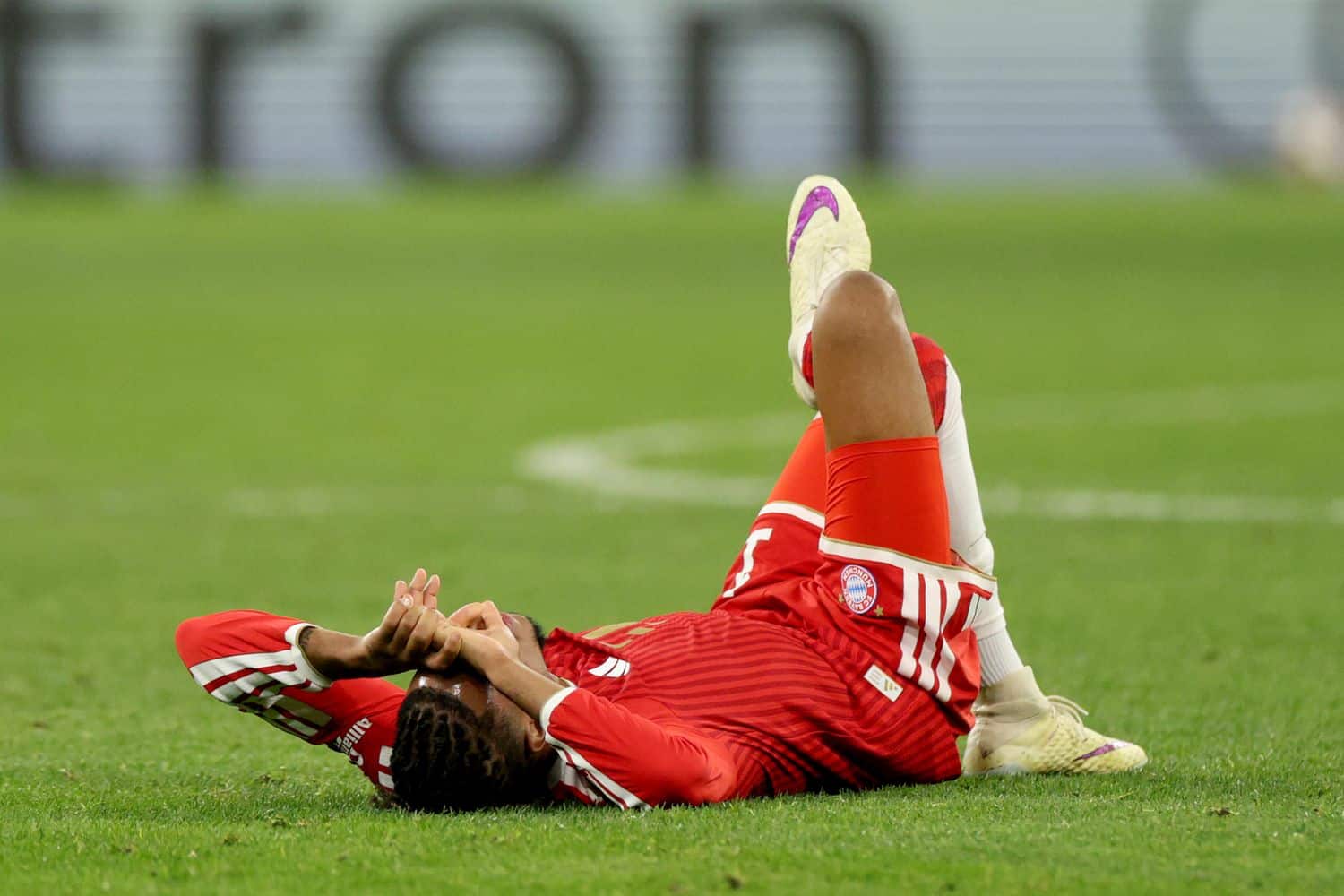
Despite the convincing victory over Atlético Madrid, the team’s strained roster remains one of FC Bayern’s biggest problems. In recent weeks, the Munich side has had to cope with repeated injury-related setbacks. The frequency of muscle injuries, in particular, is a cause for concern.
Most recently, Serge Gnabry was sidelined after suffering a muscle injury in his left thigh during the 2-2 draw against Borussia Dortmund. The national team player is expected to be out until Christmas. Ismael Saibari will also be unavailable for several months following his syndesmotic ligament tear and subsequent surgery.
On the Sky podcast “Mia san vier,” the question was therefore discussed as to whether the numerous absences could also have an impact on training. Former Bundesliga pro Torben Hoffmann provided interesting insights into the inner workings of a professional team.
Coaches are also questioning the medical staff
Hoffmann explained that when there is a noticeable cluster of injuries, coaches would examine various factors. These include not only the workload on the training field but also the collaboration with the medical staff.
“Of course, the coach will first question the medical staff, but then also the training regimen, the training intensity, and the game strategy,” explained the 52-year-old.
From his playing days, he recalled situations where coaches had to respond to personnel shortages. In some cases, training sessions were shortened or the intensity was deliberately reduced to avoid further injuries.



At the same time, Hoffmann emphasized that such decisions always depend on the specific situation. During periods without back-to-back matches, for example, it might make sense to increase the workload if the team is showing physical weaknesses.
“One or two too many muscle injuries”
In modern professional soccer, players are now monitored much more closely than they were during Hoffmann’s playing days. Physical metrics and training load data enable significantly more precise training planning.
Nevertheless, injuries apparently cannot be completely prevented. Referring to the current situation at FC Bayern, Hoffmann noted: “One or two muscle injuries too many.”
The Sky expert left open whether the recent injuries are actually related to training management. His comments refer rather to the fundamental options available to coaches and medical staff for responding to a string of injuries.
To make matters worse for FC Bayern, the team is competing in multiple tournaments. The numerous back-to-back match weeks, in particular, make it difficult for the coaching staff to reduce the workload on individual players.
After the international break, several intense weeks are once again on the schedule. This makes it all the more important for Munich to avoid further injuries and deploy its available players as strategically as possible.
Hopes are also pinned on the returning players Jamal Musiala and Luis Díaz, who could provide the coaching staff with additional options in the foreseeable future.