

FC Bayern advances to the round of 16 in the DFB Cup with a 6-1 win over Magdeburg. FCBinside offers three takeaways from the match.
FC Bayern confidently took care of business in the DFB Cup. In their 6-1 win over 1. FC Magdeburg, Aaron Danks’s team had to respond quickly after the opponent briefly tied the game, but ultimately prevailed decisively and advanced to the round of 16.
The match yielded the following takeaways:
1. Karl responds to the criticism
Lennart Karl has recently been under more scrutiny than ever before in his young career. After his strong performances last season, expectations for the 18-year-old had skyrocketed. However, following a torn muscle and a roughly twelve-week layoff, Karl has yet to regain his former fluidity since returning at the end of August.
This was also reflected in the statistics. Before the Freiburg game, Karl had logged fewer than 300 minutes in competitive matches this season and had recorded just one point. In his appearances, he often lacked the impact he had shown the previous season: his dribbling was less explosive, his shots too imprecise, and his overall influence on Bayern’s play was diminished.
The criticism of this has recently become unusually clear. After the 2-2 draw against Arsenal, Max Eberl publicly stated that Karl had “not yet reached his top level.” Uli Hoeneß’s assessment was even harsher. “I plan to have a serious talk with him. He’s far from being a superstar. Young players need humility. Comparisons with Olise are clearly not doing him any favors; there’s still a world of difference between them,” the Bayern honorary president explained in an interview with *WELT am Sonntag*.
Karl already showed an initial response in the subsequent 3-1 win in Freiburg. While he didn’t quite get everything right offensively, Eberl explicitly praised his work defending and his commitment to the team.

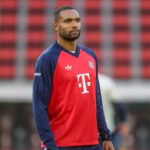

Against Magdeburg, he then made a strong statement. Karl consistently sought to push forward, demanded the ball , and brought pace to Bayern’s play with his runs. Before the 1-0 goal, he split the visitors’ defense with a strong through ball. Karl later set up Alphonso Davies’ 4–1 goal himself.
Above all, he once again appeared much bolder and more carefree. It was precisely these qualities that defined his breakthrough last season. Of course, a convincing cup performance against a second-division team is not yet proof that Karl has definitively overcome his slump. After facing harsh criticism in recent days, the youngster provided the right response on the field.
2. Saibari takes advantage of his chance this time
Ismael Saibari, too, has recently had to fight for a more prominent role. The summer signing had been given repeated opportunities to establish himself in central midfield but had too often failed to capitalize on them. Especially in the win at Freiburg, he had several chances where he could have decided the game or at least made a much stronger case for himself.
It was a different story against Magdeburg. Saibari first set up Michael Olise’s 1-0 goal and then scored the 2-1 himself with a spectacular chip shot. He was also involved in the play leading up to the penalty kick that made it 3-1: His through ball sent Alphonso Davies into the penalty area, where the Canadian could only be stopped by a foul.
This time, Saibari turned his presence into something tangible. That’s exactly what he’d been lacking recently. While he kept popping up in dangerous areas, he rewarded himself—and the team—too rarely for it. Against Magdeburg, he appeared more determined and, above all, more consistent in the final third.
A convincing performance against a second-division team doesn’t automatically make Saibari a starter. But given the current roster situation—such as the absence of Jamal Musiala—opportunities are opening up for him. Anyone who wants to claim a bigger role on a permanent basis must take advantage of games like this. Against Magdeburg, Saibari did just that.
3. Tah is coming under increasing pressure
For Jonathan Tah, the evening’s performance was far less positive. The center back didn’t always look secure and was also at fault for Magdeburg’s equalizer. Mateusz Zukowski was given too much space on the right flank before his shot was deflected by Hiroki Ito.
This performance is particularly interesting in light of developments over the past few weeks. Last season, Tah was virtually unchallenged at center back and a regular starter alongside Dayot Upamecano in key matches. The situation now looks different.
Following his lackluster performance in the 3-3 draw against Viking Stavanger came the big matches against RB Leipzig and Arsenal. In both games, Minjae Kim was preferred alongside Upamecano. Against Magdeburg, Tah and Ito started the match, while Kim and Upamecano were initially left on the bench.
With an eye toward the upcoming matches, this is at least striking. Borussia Dortmund awaits on Saturday, followed a few days later by Atlético Madrid. There are good reasons to believe that Kim and Upamecano might currently have the edge for these high-profile matches.
After the Magdeburg game, Tah himself was asked about the new situation. He said the coaching staff had “communicated nothing different” than they did last season. When asked if his recent stints on the bench had surprised him, the 30-year-old replied: “The coach decides who starts. What’s much more important is how I handle it and that I’m ready.”
These statements show that Tah, at least, doesn’t want to make the new competitive situation a public issue. However, he now has to work his way back into a starting spot that used to be almost guaranteed. Kim has capitalized on his opportunities, Upamecano is currently indispensable—and Tah was unable to make a strong case against Magdeburg to shift the pecking order back in his favor.
Tah is now under pressure. His starting spot in the big games is currently anything but secure.