

FC Bayern is looking for a solution to rising transfer fees. The academy is intended to help the team on the field while also generating new transfer revenue.
The ever-rising transfer fees on the international transfer market are forcing FC Bayern to explore new avenues. As a result, the club in Munich does not intend to simply go along with every price hike. Instead, club officials are increasingly relying on a model in which the club’s own youth development program is intended to provide a twofold benefit.
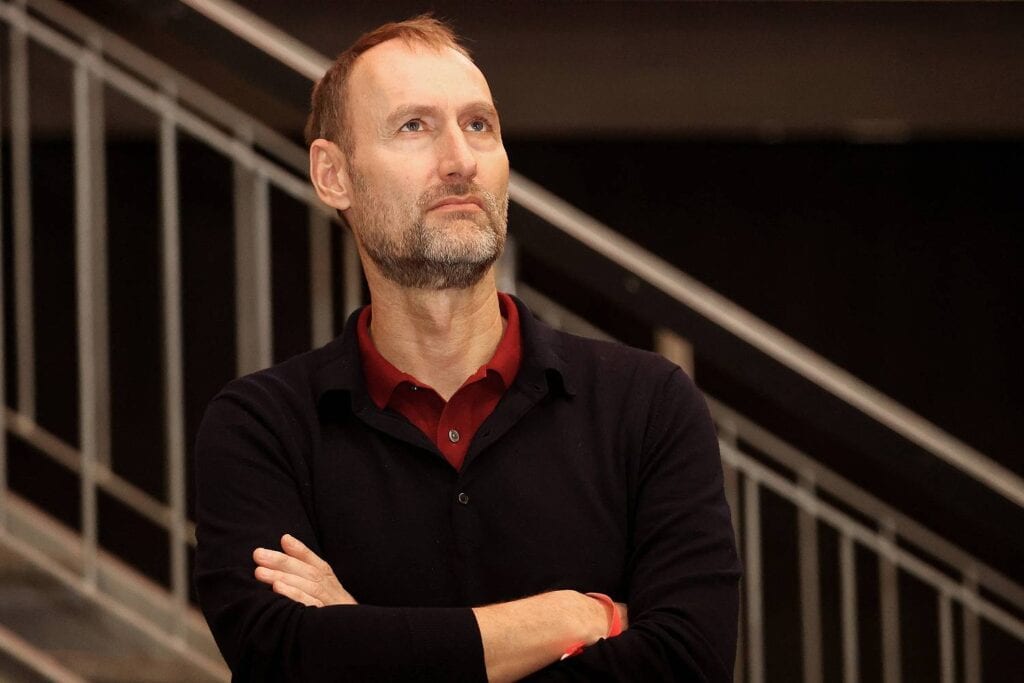
Campus director Jochen Sauer describes the strategy as a combination of athletic and financial benefits. If a young talent makes the leap to the professional team, FC Bayern may save itself the expense of a costly new signing. If, on the other hand, a player fails to secure a permanent spot on the Munich roster, the club should at least benefit financially from having trained him.
“The combination of these two factors makes the Campus a good response to the transfer madness,” Sauer explained in an interview with SPOX. As examples of successful homegrown players or Campus players, the 54-year-old cited Jamal Musiala, Aleksandar Pavlovic, Josip Stanisic, and Lennart Karl.
The idea behind this is clear: The more quality that comes from the club’s own youth system, the less Bayern relies on a transfer market where sums well beyond the 50- or even 100-million-euro mark have long been routinely demanded for top international players.
Bayern combines the models of Real Madrid and Barcelona
At the same time, the Munich club wants to make better financial use of its talent if the direct path to the first team doesn’t work out. Instead of eventually letting young players leave on free transfers, Bayern is now increasingly relying on sales, buyback options, and a share of future transfer fees.
In doing so, the record champions are also following Real Madrid’s lead. For years, Los Blancos have pursued a strategy of selling young players while simultaneously securing a share of the proceeds from their future transfers. Sauer now sees FC Bayern on a similar path: “We’ve caught up in recent years and aren’t that far behind anymore. Real has been following this system for a very long time and in a strategic manner.”



The second role model also comes from Spain. At FC Barcelona, La Masia has traditionally been the focal point for directly developing players for the club’s own professional team. That is precisely where Sauer sees Bayern’s DNA more firmly rooted: “We’re trying to combine sensible strategies as best we can and find the best path for FC Bayern Munich.”
The fact that the approach has changed is also linked to painful experiences from the past. Players like Angelo Stiller and Kenan Yildiz were developed in Munich but subsequently made their breakthroughs at other clubs. In particular, Yildiz’s transfer to Juventus Turin on a free transfer is now seen in retrospect as an example of how both athletic and economic value can be lost.
Under Vincent Kompany, the flow of players between the youth and first teams has become significantly greater. The Bayern coach regularly gives young players opportunities with the first team and is thus a key part of the new strategy.
For transfer policy, this means that FC Bayern does not intend to respond to high market prices solely with even greater investments in the future. Instead, the academy is expected to produce players for the first team—while also generating revenue when talented players continue their careers elsewhere.