

FC Bayern suffered a seemingly inexplicable loss of pointsin their 3-3 draw against Viking Stavanger. After trailing 0-2 at one point, the Munich team turned the game around in the second half, only to concede the equalizer in stoppage time. A look at the match statistics makes the result even more remarkable: The German record champions were vastly superior to their opponents in nearly every key category.
Particularly striking is the expected goals (xG) figure. While Bayern posted a value of 3.51, Viking Stavanger’s was just 0.56. Nevertheless, both teams ended up scoring three goals.
The Norwegians, in other words, made an extraordinary amount of the most out of relatively few opportunities. For Vincent Kompany’s team, on the other hand, the result is particularly bitter.
Bayern clearly superior statistically
The statistics from the Champions League matchup speak for themselves. With 66 percent possession, Munich dictated the flow of the game for long stretches. Stavanger managed only 34 percent.
The comparison is even more striking when it comes to shots on goal. Bayern took a total of 25 shots, while the hosts managed only eight. The German record champions also led 8–5 in shots on target.
Particularly noteworthy: Stavanger scored three goals from just five shots on the Bayern goal.
The differences were also massive in terms of touches in the opponent’s penalty area. While Munich had 51 such touches, Viking managed just 14.


Added to that were 15-7 corner kicks in favor of FC Bayern, as well as a pass completion rate of 88 percent. The Norwegians completed only 74 percent of their passes to teammates.
Despite this clear statistical superiority, it wasn’t enough for the record champions to secure a victory.
Stavanger scored three goals from just 0.56 xG
Arguably the most remarkable statistic of the evening is the hosts’ conversion rate. With an xG of just 0.56, statistically speaking, they would have been expected to score significantly fewer than one goal based on the quality of their shots.
Instead, Stavanger scored three times, exceeding its expected goals by 2.44 goals. This means the Norwegians scored more than five times as many goals as their xG value would have predicted.
By comparison, Bayern Munich scored three goals with an xG of 3.51, falling slightly short of the statistical expectation.
According to the statistics, Munich created three clear-cut chances, one of which went unused. Viking had two clear-cut chances and converted both.
The numbers show how efficiently the hosts capitalized on their few offensive opportunities. At the same time, they highlight just how costly Bayern’s defensive mistakes were that evening.
However, the xG metric merely reflects the quality of the scoring opportunities. It does not, for example, take into account how well a shot is actually placed or what mistakes led to a goal conceded.
Bayern cost themselves the victory
The result is particularly frustrating given how the game unfolded.
After a weak first half and trailing 0–2, the Munich team fought back impressively. Harry Kane scored twice before Luis Díaz completely turned the game around in the 70th minute.
But Michael Olise’s red card just a few minutes later changed the situation once again.
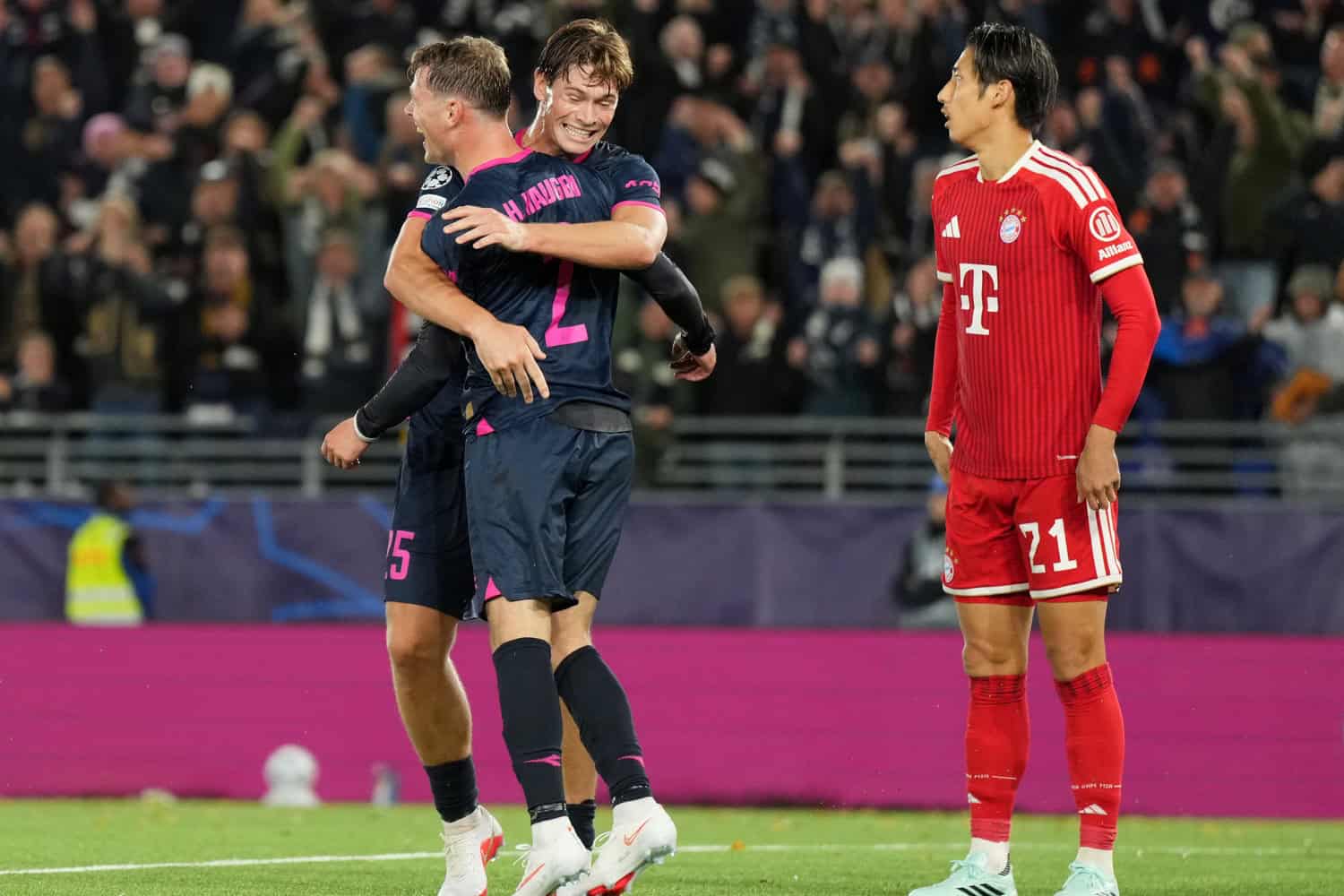
Down a man, FC Bayern was unable to hold on to their narrow lead. Herman Haugen scored the equalizer in stoppage time to make it 3–3.
As a result, Vincent Kompany’s team came away with just one point despite their overwhelming dominance.
Following the 2-2 draw against FC Augsburg, this is already the second consecutive draw for the Munich side.