

Under Vincent Kompany, FC Bayern is relying on its own youth players more than it has in a long time. Numerous talented players are getting their chance with the pros; Aleksandar Pavlovic and Lennart Karl have already made their breakthroughs. But is this development enough to compare the Bayern Campus to Barcelona’s famous talent factory, La Masia?
When FC Bayern opened its new Campus in 2017, expectations were sky-high. The Munich club no longer wanted to simply invest millions in top international stars but to regularly develop players for its own professional team. For a long time, however, the hoped-for output remained modest.
In the meantime, the picture has changed significantly. A key factor in this is Vincent Kompany. Since the Belgian took over as head coach of the German record champions, the flow of players between the campus and the professional team has noticeably increased.
Nine young players have already made their Bundesliga debuts under Kompany. In addition to Lennart Karl, these include Wisdom Mike, Jonathan Kusi Asare, Felipe Chavez, Erblin Osmani, Cassiano Kiala, Maycon Cardozo, David Santos Daiber, and Deniz Ofli.
During the current preseason as well, numerous young talents have had the opportunity to showcase their skills. Bastian Assomo, Filip Pavic, Leonard Prescott, and Tim Binder are part of a generation that could take the next step in the coming months.
Pavlovic and Karl are set to become role models at Bayern
Aleksandar Pavlovic is the prime example of how the path from the academy to Bayern’s starting lineup can work. The Munich native has long since established himself in the heart of the record-holding champions’ defense. The growth in his market value also underscores his rise: from 30 million euros in May 2024, it has since climbed to 90 million euros.
Lennart Karl’s rise has been even more rapid. His market value jumped from 1.5 to 60 million euros in just one season. The attacking player even made the leap into the German World Cup squad before an injury slowed him down.

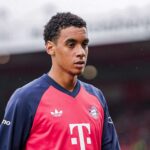
These examples show that Bayern is no longer just paying lip service to youth development. Talented players are actually being given the opportunity to prove themselves with the first team.
Bara Sapoko Ndiaye is also expected to follow this path. The 18-year-old was signed permanently after his loan and is expected to play a bigger role in the future. Kompany is considered a strong advocate for the midfielder.
Nevertheless, a comparison with FC Barcelona in particular reveals just how much work still lies ahead for the Munich club.
La Masia remains the great role model
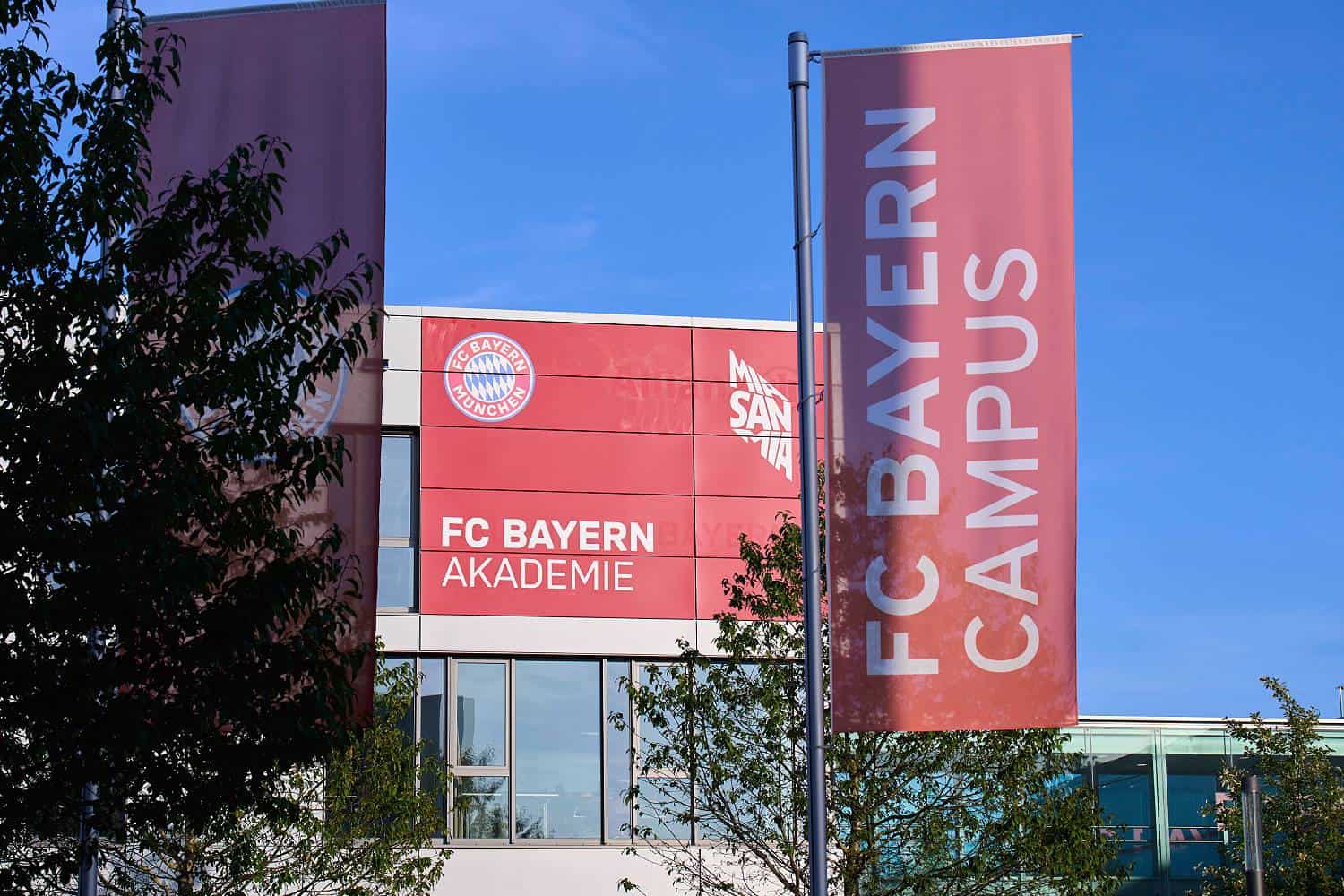
At FC Barcelona, homegrown players aren’t just a supplement—they’ve been a fundamental part of the team for decades. Lamine Yamal, Gavi, Fermín López, Pau Cubarsí, Alejandro Balde, and Marc Bernal are prime examples of the current generation.
As early as the 2025 Spanish Super Cup, Hansi Flick’s roster included eleven players with a La Masia background. Bayern currently has two genuine homegrown players—Pavlovic and Karl—who have firmly established themselves at the highest level.
That is precisely where the decisive difference lies.
In terms of infrastructure, scouting, and training conditions, the Bayern campus now has little to be ashamed of. What matters most, however, is what ultimately makes it to the top. For decades, Barcelona has succeeded in developing multiple homegrown players simultaneously into regulars—and in some cases, even global stars.
The list of past players illustrates the difference. Lionel Messi, Xavi, Andrés Iniesta, Carles Puyol, Sergio Busquets, Gerard Piqué, and Pep Guardiola were all developed in Barcelona. At FC Bayern, Philipp Lahm, Bastian Schweinsteiger, Thomas Müller, and David Alaba are among the most prominent examples from the recent past.
Bayern therefore needs one thing above all else: consistency.
If, in addition to Pavlovic and Karl, other academy players make the leap permanently over the next three to five years—and three or four of them become true regulars—the assessment would change fundamentally.
The conditions for this seem better than they were a few years ago. Under Kompany, young players are given trust and, above all, real opportunities to prove themselves.
Whether this will result in a sustainable Bayern philosophy, however, can only be definitively assessed after the Belgian’s era has ended. Developing the club’s own young talent must remain an integral part of the club’s strategy, regardless of who the head coach is.
The Bayern Campus has made great strides in recent years, and the gap to Europe’s best academies has narrowed. However, Munich is not yet on par with La Masia. Barcelona remains ahead in the decisive factor: the consistent production of its own regular starters for the first team.