

Does FC Bayern get preferential treatment from referees? This debate has dogged the German record champions for decades. Especially after controversial calls in Munich’s favor, the so-called “Bayern bonus” is quickly brought up. Former FIFA referee Deniz Aytekin, however, doesn’t buy into this theory and has now debunked this persistent myth.
Whether it’s questionable penalty calls, close offside calls, or long stoppage times: Time and again, fans of other clubs accuse the referees of giving FC Bayern preferential treatment.
Similar discussions have recently arisen around Bayer Leverkusen as well. Because the Werkself scored numerous late goals during their championship season, the term “Bayer bonus” even emerged on social media.
For Aytekin, however, such claims have nothing to do with reality.
Aytekin: “That’s more like something out of a fairy tale.”
On the TOMorrow Business Podcast, the longtime Bundesliga referee was asked about the alleged favoritism toward certain clubs.
His answer was unequivocal. “That’s more like something out of a fairy tale,” Aytekin explained, referring to the discussions about a possible ‘Bayern bonus.’
The 48-year-old can certainly understand why soccer fans discuss and argue about such theories.



“That’s part of what makes it kind of funny, but it’s not true,” he clarified.
Neither FC Bayern nor Bayer Leverkusen nor any other club receives special treatment from the referees. “It’s a myth,” Aytekin emphasized.
In doing so, the former FIFA referee contradicts the widespread assumption that large or particularly successful clubs generally enjoy an advantage in close calls.
Aytekin explains what matters most to referees
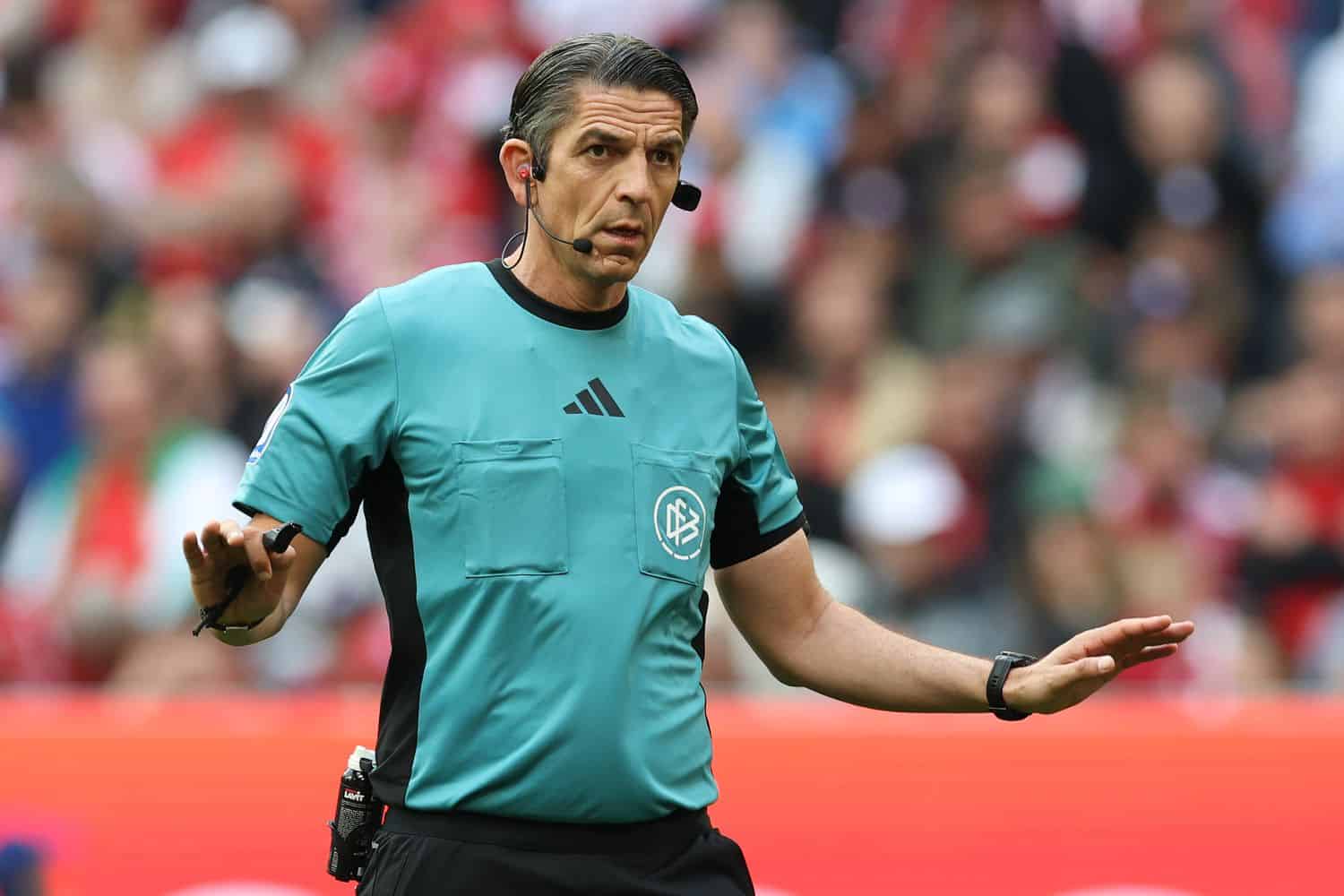
Rather than favoring individual teams, the referees’ goal is to apply the rules as consistently and fairly as possible.
Ideally, the referee shouldn’t be the center of attention at all after the final whistle. “He wasn’t noticeable at all today; he did a good job,” said Aytekin, describing the desired perception of a successful game officiating.
In his opinion, the fact that this doesn’t always work out is primarily due to the numerous situations in soccer that can be interpreted differently.
Consequently, it’s inevitable that sometimes one team and sometimes the other will feel disadvantaged.
Aytekin also sees this as part of the sport’s appeal. Discussions, emotions, and differing perspectives are all part of soccer. “Soccer entertains,” explained the former Bundesliga referee.
Despite all the controversies, one thing should not be forgotten: “At the very end, one thing unites us: this very love of soccer.”
For Aytekin, at any rate, one thing is certain: There is no systematic “Bayern bonus”—even if the discussion about it will likely continue for a long time to come.