

Bayern Munich’s dominance is once again sparking a fundamental debate about the Bundesliga’s appeal. Ahead of the head-to-head matchup between the record champions and Schalke 04, Bayern President Herbert Hainer and Schalke boss Axel Hefer engaged in a remarkable war of words.
In a joint interview with BILD, it became clear just how differently the two view the current situation in Germany’s top flight.
Hefer sees Munich’s years-long dominance as the main problem. “From a fan’s perspective—and also from FC Bayern’s perspective—I don’t think the current outcome is ideal. In his 13 years of life, my son has only seen a different German champion once; that gets boring. I believe FC Bayern, too, should have a strong interest in rethinking the league system. That way, they can continue to play in the Champions League every year while also bringing a little more excitement to the league.”
Hainer suspected this was driven by a desire for a playoff system—and firmly rejected such a reform.
Hainer firmly rejects playoffs
“I assume you’re referring to the introduction of a playoff system. We see it differently. Whoever is at the top after 34 matchdays should be crowned German champion,” the Bayern president clarified.
As an example, Hainer pointed to basketball and the danger that an entire season could be devalued by just a few playoff games. At the same time, he refuted the general characterization of the Bundesliga as boring.
“We shouldn’t speak ill of the league. Two years ago, Leverkusen won the title, and there’s always a tight race for European spots and to avoid relegation. And Mr. Hefer, Schalke will have sold out every game this season as well. In that sense, you can’t say the Bundesliga is boring.”



Hefer wasn’t convinced. For him, the excitement of the competition takes precedence over the possibility of defending a title year after year.
“Listening to you, Mr. Hainer, I believe we have fundamentally different views on this point. We’ve made it our mission to inspire and captivate people; that’s our guiding principle. Success is a key factor in that, but it isn’t everything. If I were in your position, I wouldn’t consider winning the championship every year a goal worth pursuing—excitement comes from achieving something that was never guaranteed from the start.”
“I want to win the championship every year.”
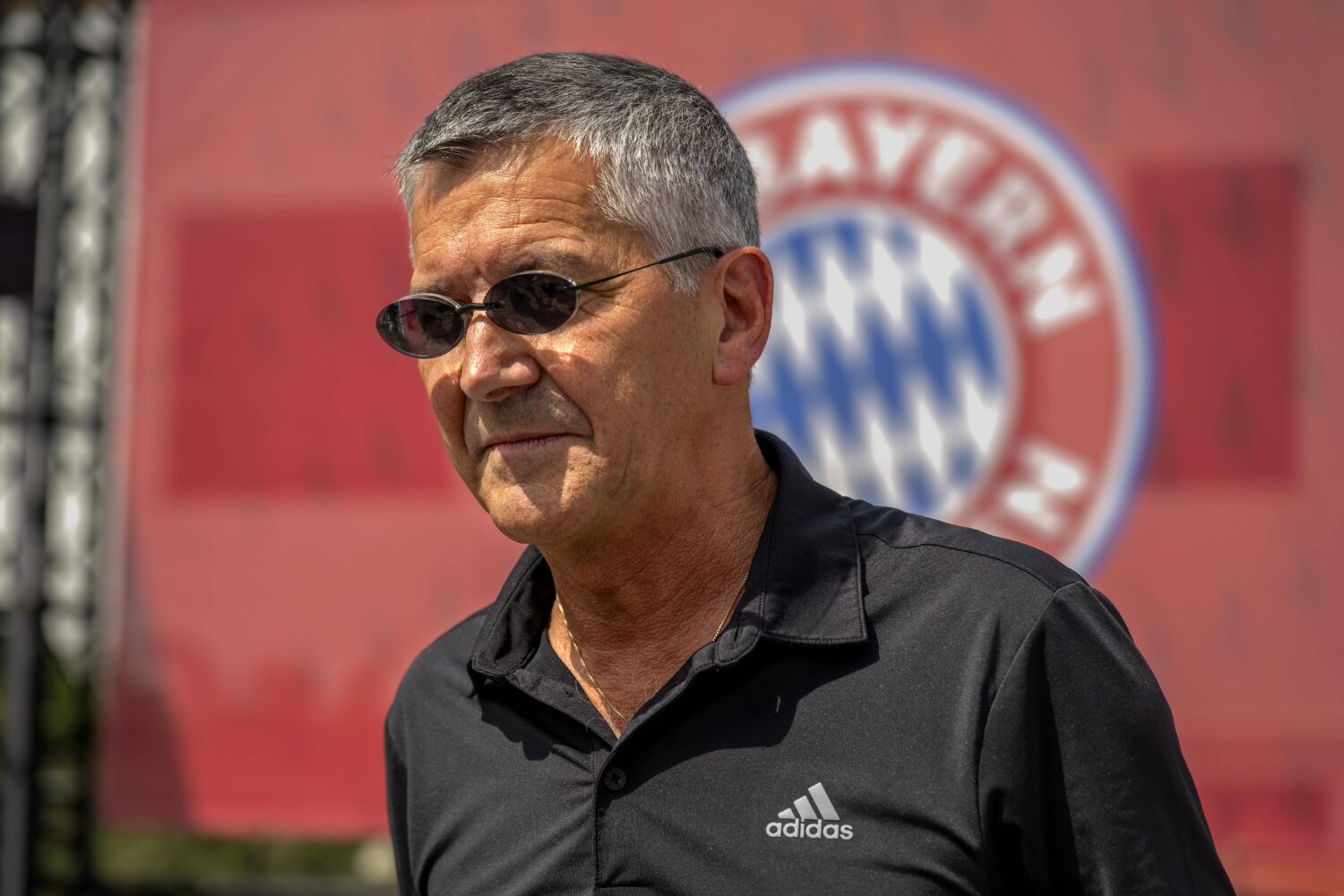
Hainer wouldn’t let that statement stand. The 72-year-old pointed to the continued enormous demand surrounding FC Bayern.
“I can assure you that we inspire our fans more than enough. When ticket sales for the next season begin at the end of a season, every single game—with 75,000 spectators—sells out within three hours. Over the past two years, we’ve seen membership growth like never before—1,000 new members every week. In total, we now have well over 450,000 members. So I can’t say that our fans aren’t enthusiastic about FC Bayern. Wherever we travel for away games, the stadiums are sold out. No other club in the Bundesliga can do that.”
In closing, Hainer boiled down the differing philosophies to a simple common denominator: “And you’re right, there is a difference of opinion between us on this point: I want to win the championship every year.”
This is unlikely to put an end to the debate over possible reforms to the Bundesliga. While Hefer advocates for more excitement through changes to the competition system, Hainer sticks to the classic model: After 34 matchdays, the best team should be crowned champion—even if that team ends up being FC Bayern once again.