

Max Eberl recently received a clear vote of confidence at FC Bayern. The supervisory board of the German record champions extended the sports director’s contract through 2029. Behind the scenes, however, the decision was apparently not nearly as clear-cut as the unanimous vote would suggest.
As Sport BILD reports, in the run-up to the decisive supervisory board meeting, not all members of the supervisory board were fully convinced by Eberl’s work to date. Karl-Heinz Rummenigge, in particular, is said to have been viewed internally as a critic rather than a supporter of the 52-year-old.
In the end, however, even Rummenigge backed the contract extension. The supervisory board’s decision was unanimous. The fact that Eberl nevertheless received only a new contract through 2029 is said not to have been a coincidence.
Only two years instead of three for Eberl
Normally, a three-year extension would have been the logical choice. In Eberl’s case, however, Bayern deliberately opted for just two additional years. According to information from Sport BILD, this was a compromise initiated by President and Supervisory Board Chairman Herbert Hainer.
This allowed Bayern to ensure continuity in its sports management on the one hand, without committing to Eberl for the long term on the other.
According to the report, the message behind the shorter contract term is clear: The sporting director now has sufficient time to prove once again that he is the right man for this important position in the long term.
Despite the extension, Eberl thus remains under scrutiny. The upcoming transfer windows and the team’s on-field performance are likely to have a decisive influence on how his work within Bayern’s leadership will be evaluated in the future.



Rummenigge was considered a critic of Eberl
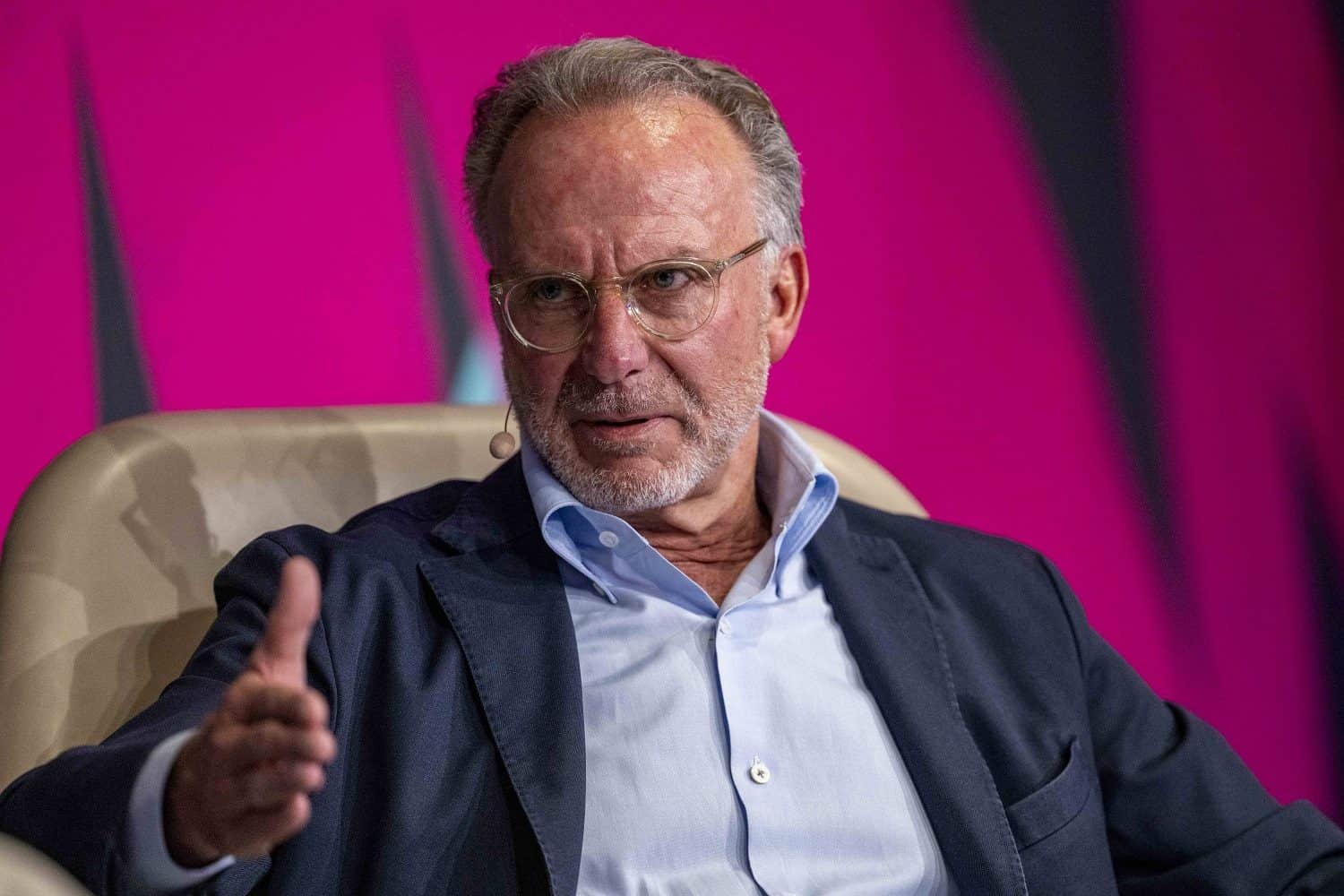
Rummenigge’s role is particularly interesting in this context. As a member of the supervisory board, the former CEO continues to wield considerable influence at the record-holding club. The fact that he is said to have been among Eberl’s critics in the run-up to the decision shows that the sporting director was by no means uncontroversial internally.
Nevertheless, those in charge managed to find common ground. With this unanimous decision, FC Bayern also avoided the perception of a divided leadership.
For Eberl, the contract extension is therefore both a vote of confidence and a mandate. He can plan his work with a longer-term perspective and has the backing of the entire supervisory board. At the same time, the unusually short extension sends a clear signal.
Eberl now has until 2029 to finally win over his critics. Whether a further long-term collaboration follows after that will likely depend largely on how successfully he continues to develop the FC Bayern roster in the coming years.