

Jürgen Klopp has brought a breath of fresh air to the German national team with his first appearances as head coach. Oliver Kahn, however, warns against viewing the coaching change as a solution to the fundamental problems facing German soccer.
The former Bayern boss sees structural shortcomings above all else. In his view, Germany lacks a long-term strategy that works regardless of who is serving as national team coach.
“I believe that in German soccer, we haven’t managed to establish and build a system comparable to the one we see in Spain,” Kahn explained on RTL. The DFB lacks “a system you can rely on and within which things are constantly evolving.”
Kahn: “Basically, we haven’t changed anything at all.”
Instead, the discussion in Germany focuses too heavily on the national team coach as an individual. Kahn sees this as a fundamental problem.
Ultimately, the coach is the “weakest link in the chain.” As soon as results fail to materialize, he is replaced—with the hope that this will automatically bring about fundamental change.
“We replace him and believe we’ve changed something,” Kahn criticized. His conclusion is clear: “Basically, we haven’t changed a thing.”
Even the switch from Julian Nagelsmann to Klopp changes little in the 57-year-old’s view, at least for now. Of course, the new national team coach brings “completely new ideas” and a different style of play. But that alone cannot solve the long-term problems facing German soccer.


“Changing coaches won’t save us. We’ll only move forward if we take an honest look at what’s happened in German soccer over the past ten years—that we no longer play a role,” Kahn emphasized.
“We’ve over-optimized the players.”
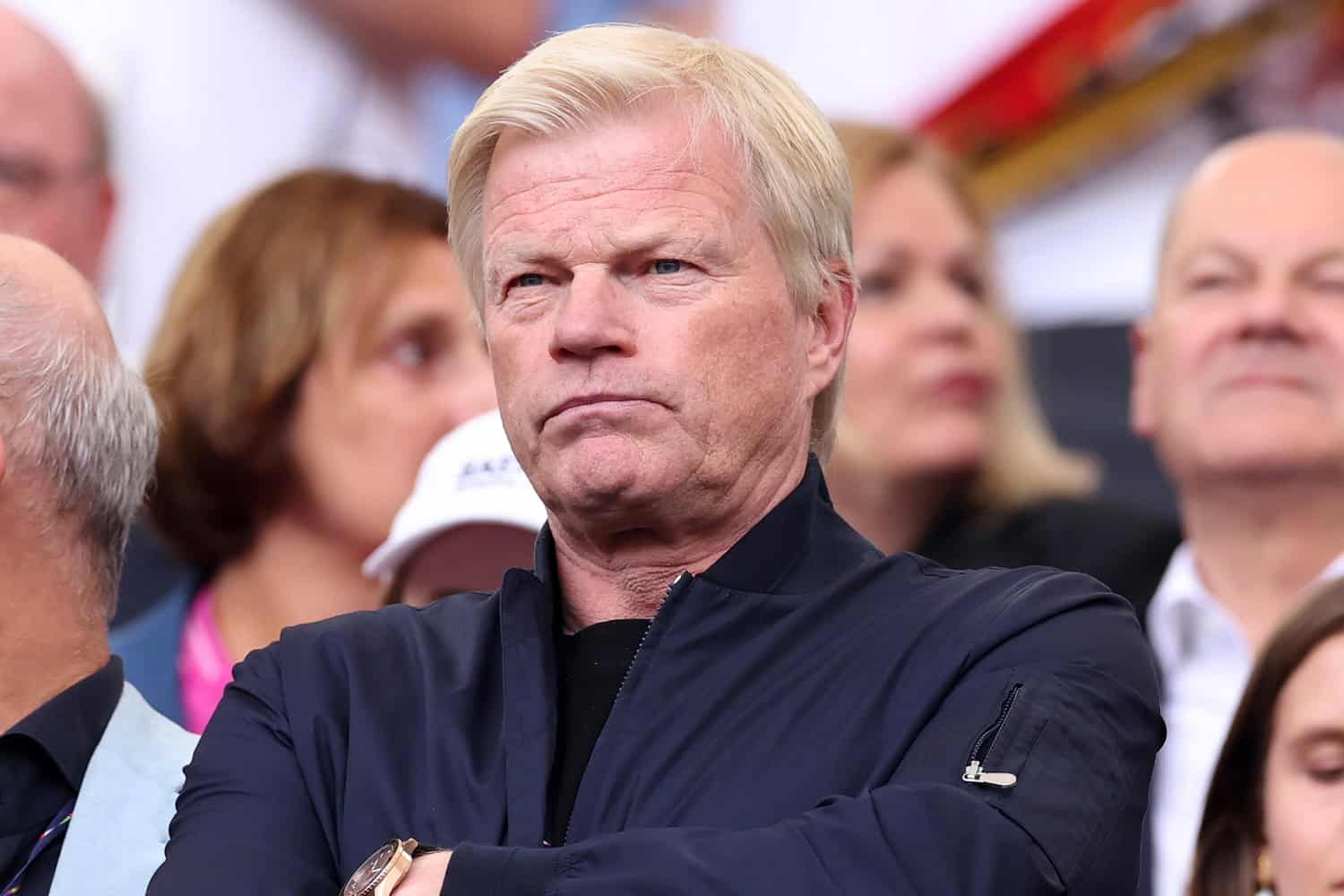
Kahn’s assessment of Germany’s youth development program is also noteworthy. While there is repeated discussion about a lack of outstanding talent, the former national team goalkeeper sees the problem elsewhere.
“In my view, it’s not because there’s no talent left or because we haven’t trained them properly,” Kahn explained. Rather, he said, youth development has at times been overly controlled: “We’ve over-trained them. We’ve over-optimized the players and completely forgotten that you shouldn’t do everything for young people.”
This makes it harder for young players to develop their own personalities and take on responsibility. Yet it is precisely these qualities that are crucial at the highest level.
Accordingly, Kahn is skeptical of the idea that Klopp alone, through his work as national team coach, could spark a lasting resurgence.
“We now believe that with a new coach who does a few things differently, we’ll be successful again. In my view, that’s completely absurd. Who can believe something like that? I have serious doubts.”
Klopp has already made numerous changes in his first four games and tested a total of 44 players. For Kahn, however, the future of German soccer isn’t decided solely on the coaching bench. In his view, fundamental structural changes are needed for the DFB to become more successful again in the long term.