

The German record champions did not undergo a major transfer revolution. Nevertheless, the roster for the 2026–27 season differs from some of its predecessors in one key respect: flexibility is no longer intended primarily to fill in for missing backups.
In the past, Bayern certainly had numerous versatile players as well. However, problems often arose when a single player was relied upon as an alternative for multiple positions. If that player was sidelined, it sometimes created several gaps to fill at once.
This time, the situation is different.
Bayern has two players for nearly every position
Even if João Palhinha, Sacha Boey, and Bryan Zaragoza were to leave the club, Kompany still has at least two options for nearly every position.
There are currently nine players available for the four defensive positions. In central midfield, there are five candidates for two spots, while in the attack, nine professionals are vying for four positions.
Added to that are numerous academy talents such as Maycon Cardozo, Cassiano Kiala, Filip Pavic, Felipe Chavez, and Bastian Assomo. Kompany has already made it clear during preseason that the young players will be given real opportunities if they perform well.
The key difference: the versatility of individual players thus becomes an additional asset rather than a stopgap measure.



Brown and Saibari embody Bayern’s new approach
This approach is particularly evident with the two high-profile summer signings.
Brown can play both fullback positions but also has the skills to play in central midfield or on the left wing. His speed and dynamism are a perfect fit for Kompany’s aggressive press.
Saibari offers a similar range of options. The Moroccan can play as a number 10 or a number 8, operate from the wide midfield positions, or take on a deep-lying attacking role. This allows Kompany to react tactically during a game without necessarily having to make substitutions.
Brown, in particular, fills a specific gap at the same time.
Davies’ absences should no longer disrupt the system
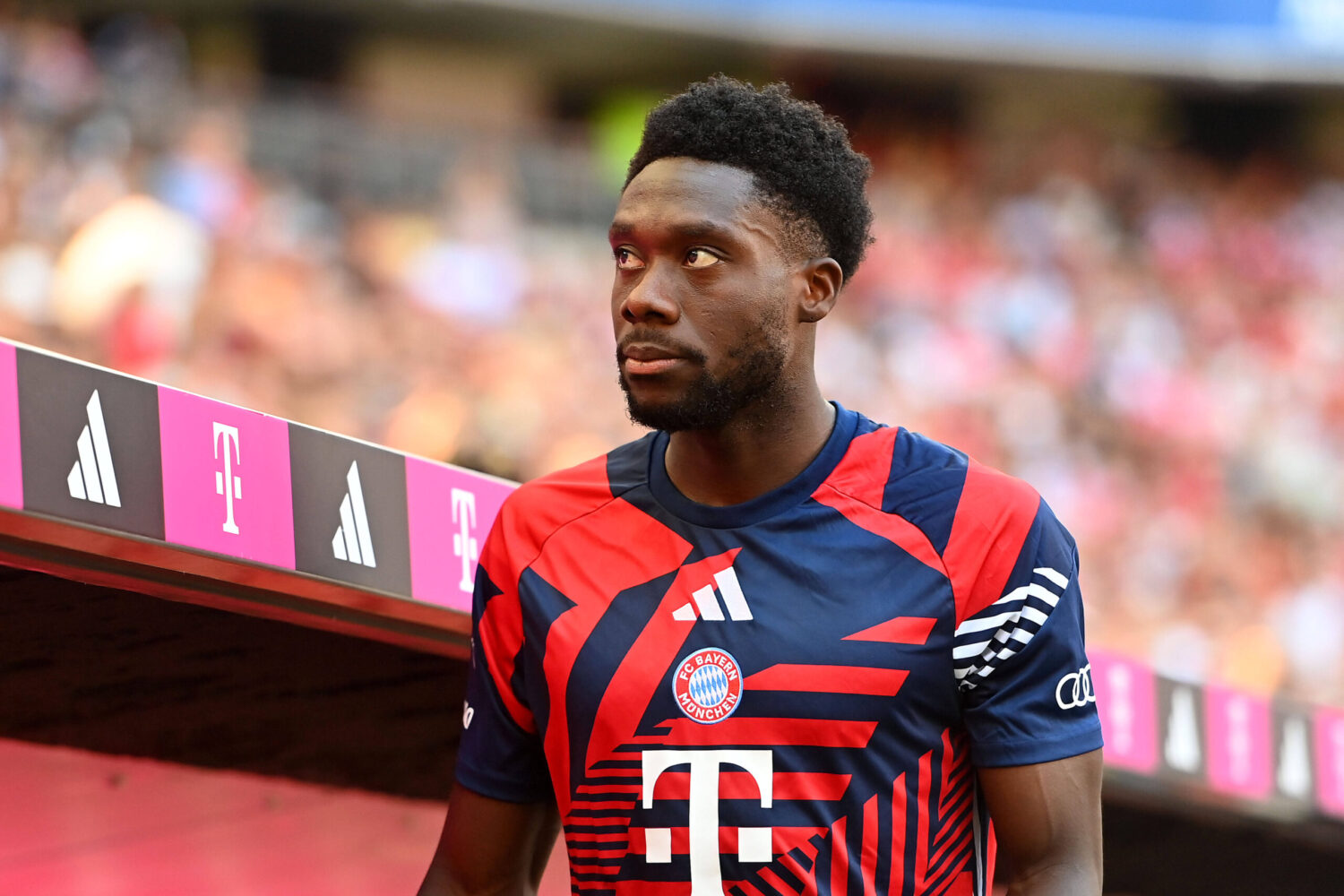
In the past, when Alphonso Davies was out, Stanisic, Hiroki Ito, or Konrad Laimer could step in on the left side of defense. However, they couldn’t replace the Canadian’s exceptional speed and dynamism.
Brown brings exactly those attributes to the table. As a result, Bayern doesn’t necessarily have to change its style of play if Davies is out.
When Davies is fit, new possibilities open up. Max Eberl recently confirmed that the club is considering using the 25-year-old in a more attacking role in the future. In that case, Brown could take over the position behind him.
This is precisely where the key difference from the past lies: Bayern hasn’t simply gathered as many versatile players as possible, but has instead strategically doubled up on different roles.
This gives Kompany the ability to adjust his lineup depending on the opponent and the situation on the field without automatically creating a new gap elsewhere. The squad’s versatility is thus no longer just a safety net for emergencies—it could become one of the new Bayern’s greatest strengths.