

The discussions surrounding Jamal Musiala at FC Bayern are taking on a new dimension. After Karl-Heinz Rummenigge recently expressed public doubts about the 23-year-old’s athletic future, explosive details are now coming to light. Apparently, the former CEO’s statements caused considerable irritation even within the Munich club’s upper management. At the same time, a conflict between Rummenigge and sporting director Max Eberl could also be behind the debate.
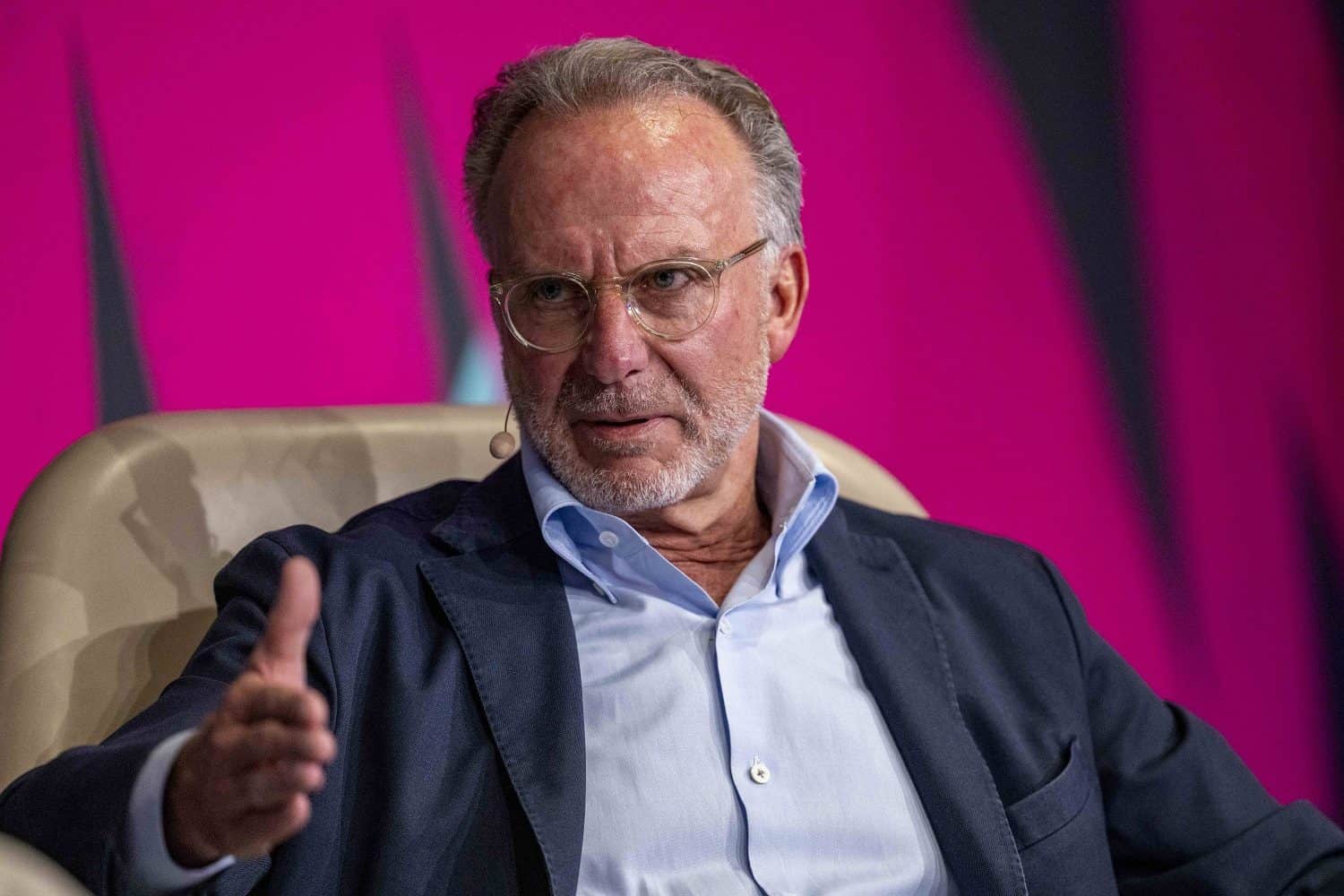
Rummenigge’s remarks following the 1-1 draw against 1. FC Köln caused a particular stir. The 71-year-old not only questioned Musiala’s future performance but also brought up his highly lucrative contract. The public criticism sparked a heated debate.
As SZ reporter Philipp Schneider reports in the podcast “Und nun zum Sport,” Rummenigge’s actions were apparently by no means fully coordinated internally. Rather, numerous officials are said to have been surprised by the bluntness of his statements.
Rummenigge’s remarks shocked Bayern’s leadership
“The absolute highlight was Rummenigge’s interview. It wasn’t just the words, but also the coolly calculated manner in which he delivered them that, in my opinion, shocked many people,” Schneider explained in the podcast.
According to the journalist, there is fundamental agreement among Bayern’s top leadership that the situation surrounding Musiala needs to be addressed.
However, Rummenigge’s specific approach had not been coordinated. “What Rummenigge did on Friday evening had not been agreed upon in detail beforehand in this form at all,” Schneider emphasized.
Consequently, the public appearance also caused considerable surprise even within the club’s leadership.


Rummenigge apparently distrusts Eberl
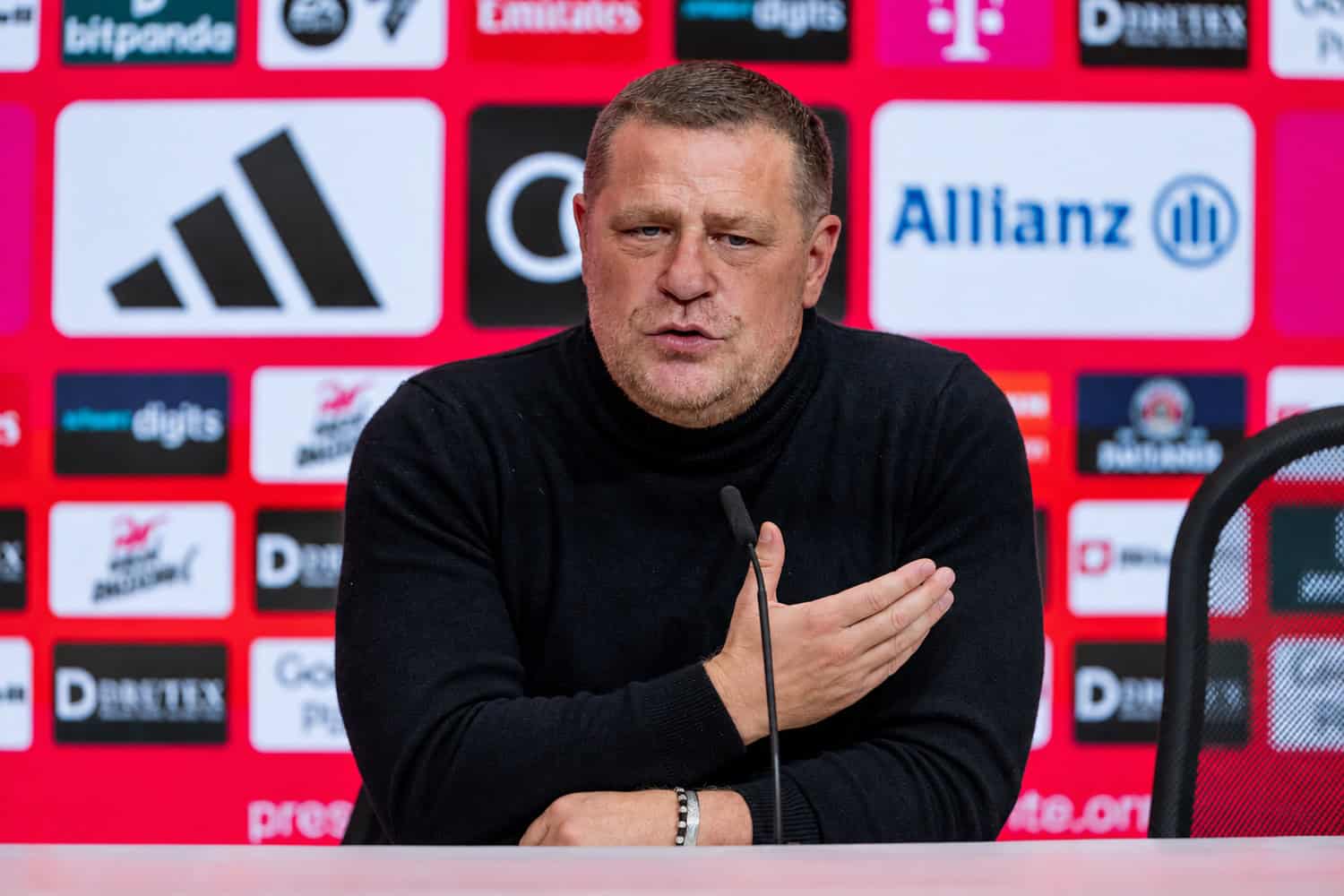
Schneider’s statements about the relationship between Rummenigge and Max Eberl are particularly explosive. The SZ reporter pointed out that Rummenigge had abstained from voting on the decision regarding Eberl’s contract extension.
From Schneider’s perspective, this was a clear sign of a lack of trust. “My distrust of our sporting director at FC Bayern is so great that I couldn’t give him a thumbs-up,” the journalist said, summarizing the message Rummenigge intended to convey.
In his assessment, this strained relationship could also play an important role in the current Musiala debate.
Musiala’s contract is reportedly causing internal friction
The focus here appears to be on the multi-million contract that Musiala signed in February 2025.
According to Schneider, the attacking player’s base salary is estimated at 25 million euros annually. Through additional agreements and bonus payments, the total could even rise to more than 30 million euros.
Particularly noteworthy: The contract is said to be so complex that, at the time of signing, not all of its details were fully understood within FC Bayern.
Schneider also reported that Rummenigge had already been dissatisfied with the agreement at the time.
Yet the supervisory board member had approved the contract himself. Nevertheless, criticism has since also been directed at Eberl, who was largely responsible for the contract extension. “It always points a little in Eberl’s direction, and at least one of Rummenigge’s fingers always points at Eberl when it comes to Musiala,” Schneider explained.
Will Eberl be held responsible for the Musiala contract?
According to the SZ reporter’s assessment, Rummenigge’s actions could also be interpreted as retroactive criticism of Eberl’s decision regarding the contract at the time.
The message, in essence, is that now, of all people, those who did not originally negotiate the contract themselves are the ones who must correct the consequences.
Yet the situation is quite contradictory: Rummenigge, as a member of the supervisory board, had approved the contract extension, but has since publicly expressed doubts about its financial viability.
Eberl, for his part, had recently demonstratively stood behind Musiala and emphasized that the sporting leadership held a different view than some members of the club’s top management.
Schneider’s latest statements suggest that the Musiala case is no longer solely a discussion about the national team player’s athletic future.
Rather, internal power struggles and differing views on roster planning could also be playing a role. Whether Rummenigge’s public criticism was in fact specifically directed at Eberl, however, remains the assessment of the SZ reporter.