

Uli Hoeneß and Karl-Heinz Rummenigge continue to shape FC Bayern’s direction to this day. It’s time for the current leadership to chart its own course. An opinion piece.
Jamal Musiala took the field against Cologne for the first time in about two months. A deflected shot narrowly missed the target; it almost secured a victory for Bayern on his return. After the game, people could have discussed what those first few minutes meant for him and the team. Instead, the conversation once again turned to his salary. Karl-Heinz Rummenigge had explained on Sky under what circumstances he would consider talks about adjusting the contract to be appropriate. Just under two weeks earlier, Uli Hoeneß had publicly expressed doubts on the BR Stammtisch about whether Musiala would ever return to his former level.
Hoeneß and Rummenigge can determine, with a single appearance, what people at FC Bayern will be talking about for days. Those in charge of the team then have to explain statements they never actually made themselves. Max Eberl and Vincent Kompany stood behind Musiala after the Cologne game. Maik Franz, vice president of the players’ union VDV, explicitly excluded both of them from his criticism on “Doppelpass,” “because they’ve behaved in an exemplary manner.” Rio Ferdinand also criticized the public treatment of Musiala. The international players’ union FIFPRO addressed the club’s leadership directly.
The formal lines of authority at FC Bayern are clear. Herbert Hainer is the club president and chairs the supervisory board of the public limited company. Jan-Christian Dreesen heads the executive board. Hoeneß is honorary president and, like Rummenigge, sits on the supervisory board. Operational responsibility lies with the executive board. Nevertheless, when it comes to sensitive issues, Hoeneß and Rummenigge act with an authority that makes them appear to the outside world as if they were the actual bosses. The Musiala case shows just how far this influence extends beyond their formal roles.
One can certainly concede that both want what’s best for FC Bayern. A club of this size can discuss internally how it evaluates a highly lucrative contract. But anyone who questions a player’s athletic future at a bar and then talks about his salary on television on the evening of his comeback is turning it into public pressure. If these appearances were calculated, those in charge accepted that pressure. If the statements were made on the spur of the moment, there is a lack of sensitivity regarding what such words trigger for the player and the club.
Eberl should set the athletic course
FC Bayern has a sporting director who has demonstrated his leadership in this debate. Eberl has backed Musiala and focused attention on what the player needs right now. After his break, he first needs to get back into the swing of things. Eberl, together with Kompany, should be able to determine how Bayern handles such a sensitive sporting personnel matter. To do so, he needs support from the executive board and the supervisory board. And he must also make use of the leeway his position affords him.
Rummenigge himself revealed just how controversial his contract extension was. “It wasn’t until during the meeting that I decided to abstain,” he told the Abendzeitung. He had previously considered voting “no.” He explained his decision by saying he did not want to be bound in advance by the recommendation of the Executive Committee. The Supervisory Board extended Eberl’s contract through 2029. The board has thus given him the mandate to continue shaping the club’s sporting direction. In a debate like the one surrounding Musiala, it will become clear just how much this mandate is worth in day-to-day operations.



Bayern had already initiated a generational change once before. With Oliver Kahn and Hasan Salihamidžić, a younger leadership team took over. After their dismissal in 2023, Dreesen became CEO, and Rummenigge returned to the supervisory board a few days later. The next step must therefore clarify the question of how much autonomy Bayern actually grants its leadership. Hoeneß built the club over decades. His achievements explain why his word still carries so much weight today. The responsibility for Bayern’s future lies with those who lead the club today.
Members can also nominate candidates
Hoeneß doubts that former Bayern pros such as Thomas Müller, Philipp Lahm, or Bastian Schweinsteiger would be willing to take on the workload of such a top-level position, given their financial independence. Whether they want to assume this responsibility is up to the three of them to decide—even without Hoeneß.
Members would also have a say in the presidency. Hainer was reelected in 2025 for a three-year term; the next regular election is scheduled for 2028. Members can propose their own candidates to the Administrative Advisory Board. A Müller candidacy is purely hypothetical, but it illustrates how a personnel alternative could be put on the agenda for this office even without Hoeneß’s backing. FC Barcelona and Real Madrid demonstrated what such an election might look like in 2026. At both clubs, members were able to choose between two candidates for the presidency.
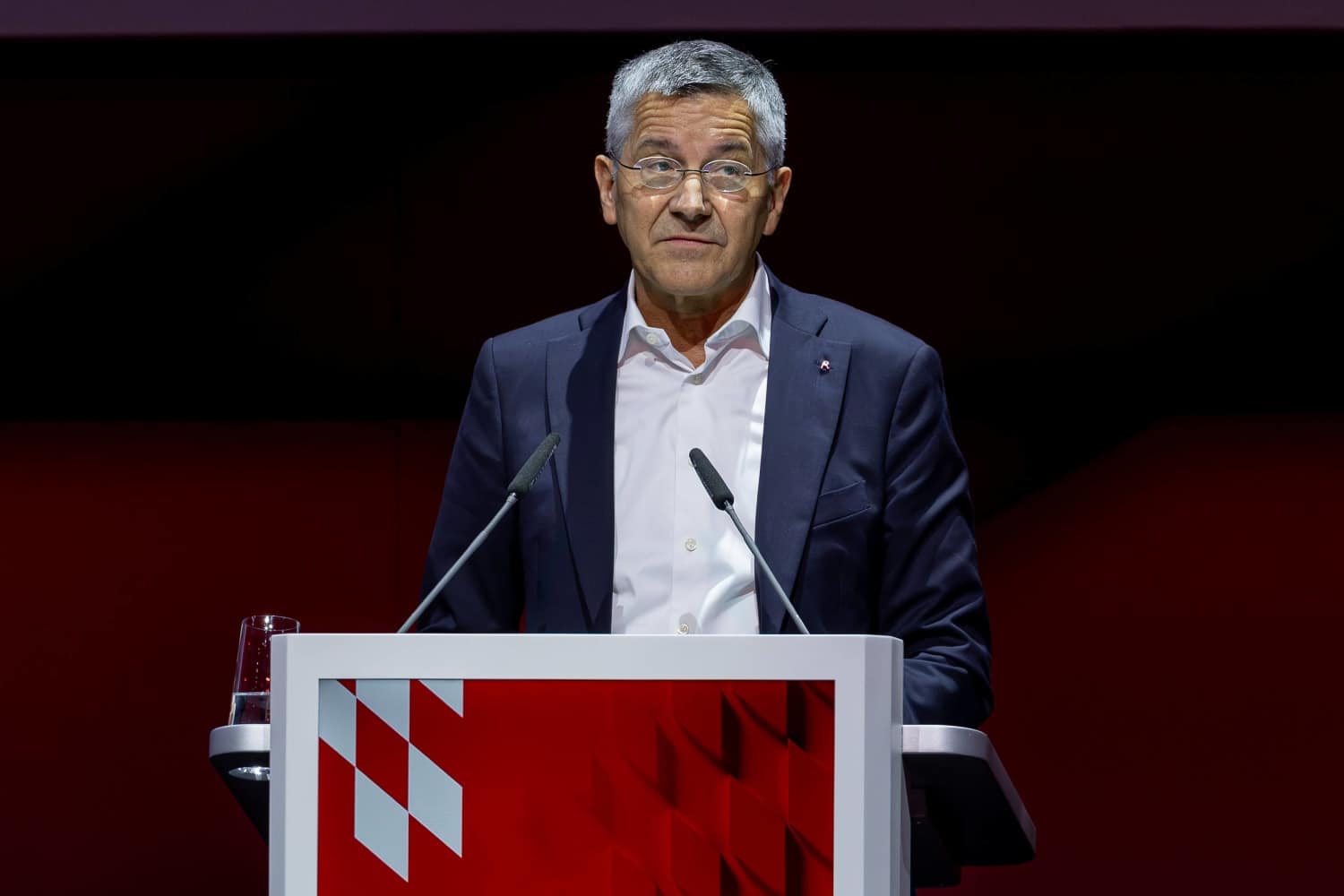
However, the question of power at Bayern is already being raised today. Public criticism of the handling of the Musiala situation is increasing the pressure on FC Bayern to take its own responsibilities seriously. As chairman of the supervisory board, Hainer can insist that confidential matters remain within the board. Dreesen can back up his sporting director. And Eberl, together with Kompany, can set the course on sporting matters.
Just how serious Bayern is about the leadership transition will become clear when the next sensitive issue arises. Then those in charge should be able to explain what they themselves have decided, before they once again have to explain what Hoeneß or Rummenigge meant. They don’t need anyone’s approval for that.