

Sometimes, when it comes to FC Bayern, you really have to wonder what the club’s leadership is trying to achieve with its public communications. Jamal Musiala worked for months toward his return, overcame numerous setbacks, and finally took the field again against 1. FC Köln. That should be a cause for celebration. But instead of talking about his comeback, the German soccer world is debating whether the 23-year-old even still justifies his multi-million salary. A commentary.
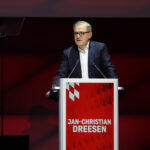
Ironically, the ones responsible for this are the very men who have shaped FC Bayern for years. Uli Hoeneß sparked the discussion, CEO Jan-Christian Dreesen subsequently weighed in, and Karl-Heinz Rummenigge made his position even clearer after the game against Cologne. The former CEO even questioned whether Musiala’s salary would remain justifiable if he fails to return to his former form.
One could view these statements as economically sound. After all, we’re talking about a player who, including bonus payments, can earn more than 25 million euros per year. But the crucial question isn’t whether Bayern is allowed to have such concerns. It’s why they feel the need to air them on camera.
Is the public criticism of Musiala possibly coordinated?
What is particularly thought-provoking about this debate is the sequence of statements. First Hoeneß, then Dreesen, and finally Rummenigge. Three influential voices at FC Bayern who, within a short period of time, have publicly expressed doubts about Musiala’s athletic and financial future.
This inevitably raises the question: Is this really a coincidence, or is there a coordinated communication strategy behind it?
There is no evidence of a coordinated effort so far. Nevertheless, the timing is remarkable—especially since the statements are substantively aligned and are gradually increasing the pressure on Musiala.
If the criticism is indeed deliberately coordinated, that would be a highly questionable way to treat a player who has only just recovered from a long injury layoff.


And even if the statements aren’t coordinated, it raises questions. Because in that case, FC Bayern is apparently failing to ensure consistent communication regarding one of the club’s most sensitive personnel matters.
Both scenarios would be anything but ideal.
Who actually signed Musiala’s multi-million contract?
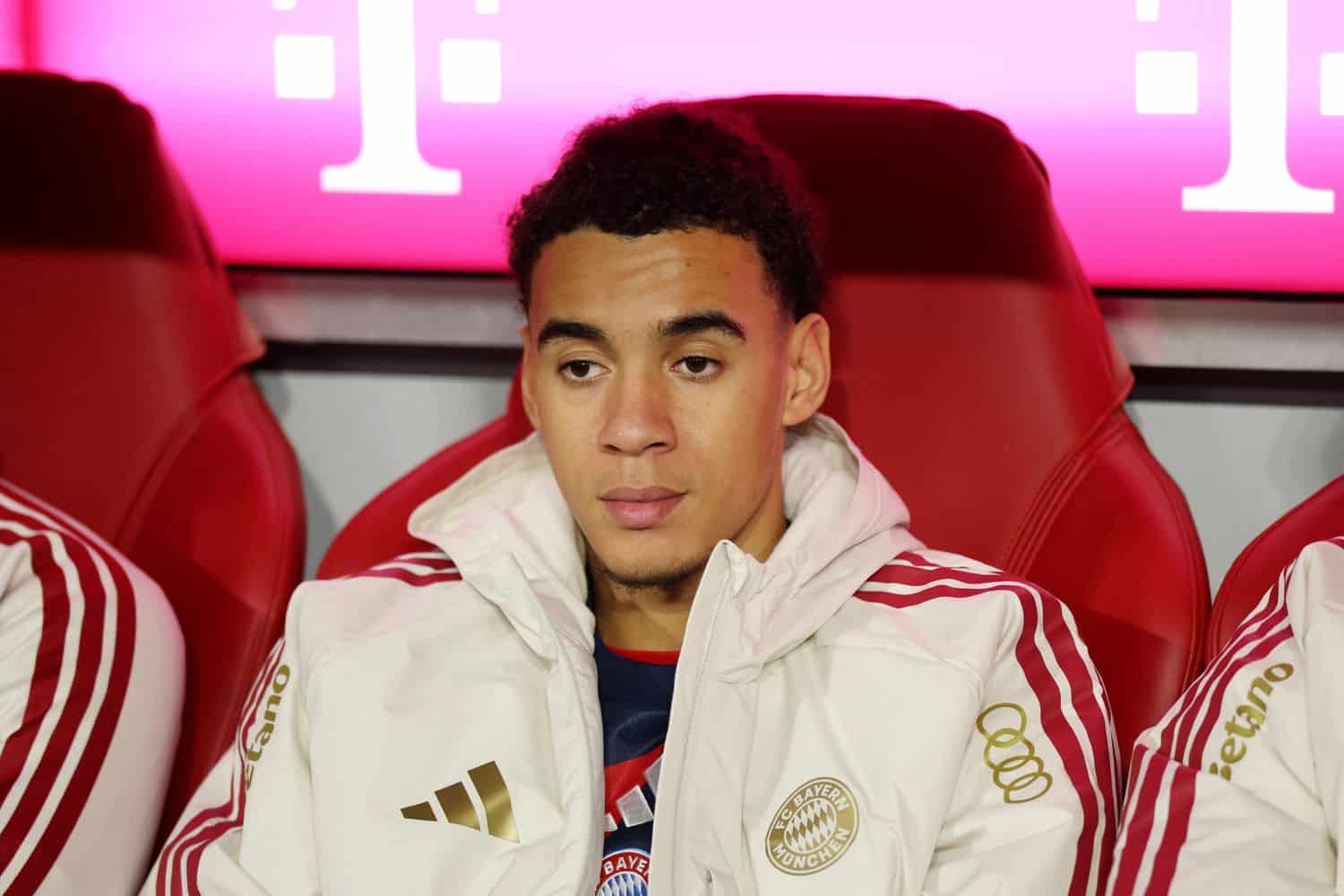
It’s been just under two years since Bayern celebrated extending Musiala’s contract. Back then, the national team player was the face of the future—an exceptional talent around whom a new era of success was supposed to take shape.
It probably came as no surprise to anyone that such a player would want to be paid accordingly. Bayern made a conscious decision to sign this contract. No one forced the club’s leadership to tie Musiala to the club until 2030.
Today, however, the impression is that his salary has suddenly become a problem for which the player, above all, must justify himself.
That is a remarkable shift in responsibility.
Of course, the situation is financially difficult for FC Bayern. A long-term contract worth millions entails significant obligations, especially when a player is sidelined by injury for an extended period.
But Musiala is not responsible for his injuries. And until now, FC Bayern has always adhered to the principle that signed contracts must be honored.
Anyone who pays a player millions during good times must stand by that decision even when the player’s athletic development temporarily falls short of expectations.
Rummenigge should remember his own words
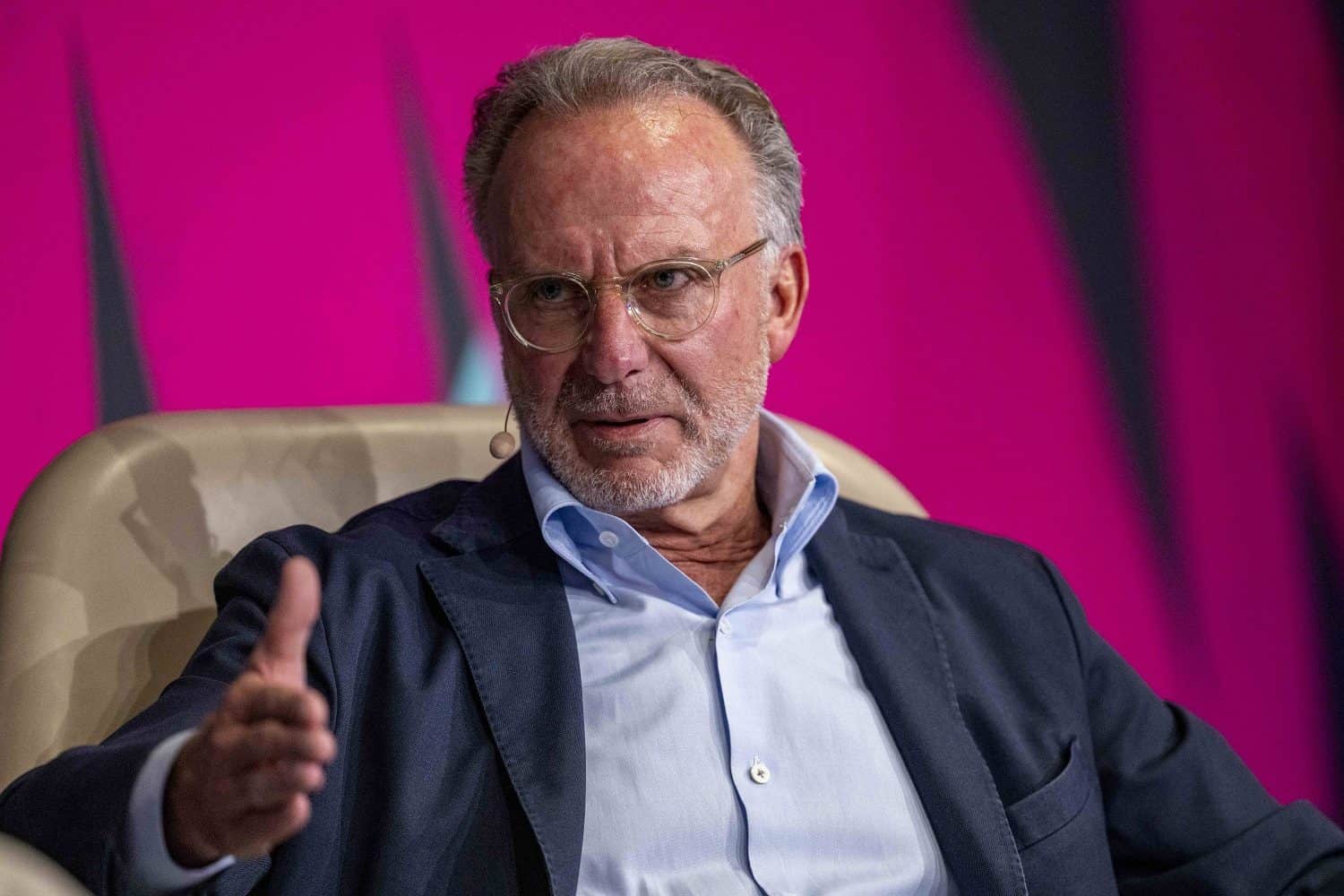
Karl-Heinz Rummenigge’s recent statements are particularly irritating given his own past.
In October 2018, the then-CEO appeared before the press alongside Uli Hoeneß and Hasan Salihamidzic and criticized the public treatment of Bayern players.
At the time, Rummenigge even cited Article 1 of the German Constitution: “Human dignity shall be inviolable.”
His message was clear: Professional soccer players, too, deserve respect and must not be publicly disparaged.
At the time, this criticism was directed primarily at journalists and their reporting.
This makes it all the more surprising that Rummenigge is now publicly speculating himself about whether Musiala will ever be able to return to his former level of performance and whether his salary is still justified.
Of course, objective criticism is not a violation of human dignity. And naturally, Rummenigge is also entitled to critically examine athletic performance.
But someone who once so vehemently demanded that players be treated with respect should know exactly what impact such statements can have.
Perhaps it would actually be helpful to take another look at his own press conference from back then.
FC Bayern creates its own problems
What’s particularly frustrating is that this entire debate is completely unnecessary.
Musiala has only just returned to the field. No one can seriously assess how well he’ll perform in three, six, or twelve months. Maybe he needs time. Maybe he’ll reach his former level sooner than expected.
What can be said for certain, however, is that these public statements aren’t helping his situation.
They neither help Musiala get back in shape any faster nor create financial leeway. Instead, they provide the public with a discussion that the club could easily have behind closed doors.
And they send a questionable message to the team: Even players at FC Bayern who are considered unsellable and have long-term contracts must expect their future to be publicly questioned after an injury.
Kompany shows what Bayern needs right now
This makes the contrast with Vincent Kompany all the more striking.
The Bayern coach doesn’t talk about Musiala as if he were a financial burden, but as a player he trusts. He sees his potential, appreciates how he handles setbacks, and wants to help him get back to his best form.
This very attitude should actually be a given at FC Bayern.
Of course, Hoeneß, Dreesen, and Rummenigge don’t have to sugarcoat every development. Of course, a club must be run with financial prudence. But there’s a huge difference between internal analysis and publicly criticizing one’s own players.
FC Bayern likes to describe itself as a family—a club that operates differently from its international competitors, one that protects its players and stands together even in difficult situations.
Musiala’s situation, in particular, would be the perfect opportunity to prove this claim.
Instead, the image emerging is of a club where various officials publicly express doubts about a player, while the coach and sporting director try to back him up.
Bayern should finally start talking about soccer
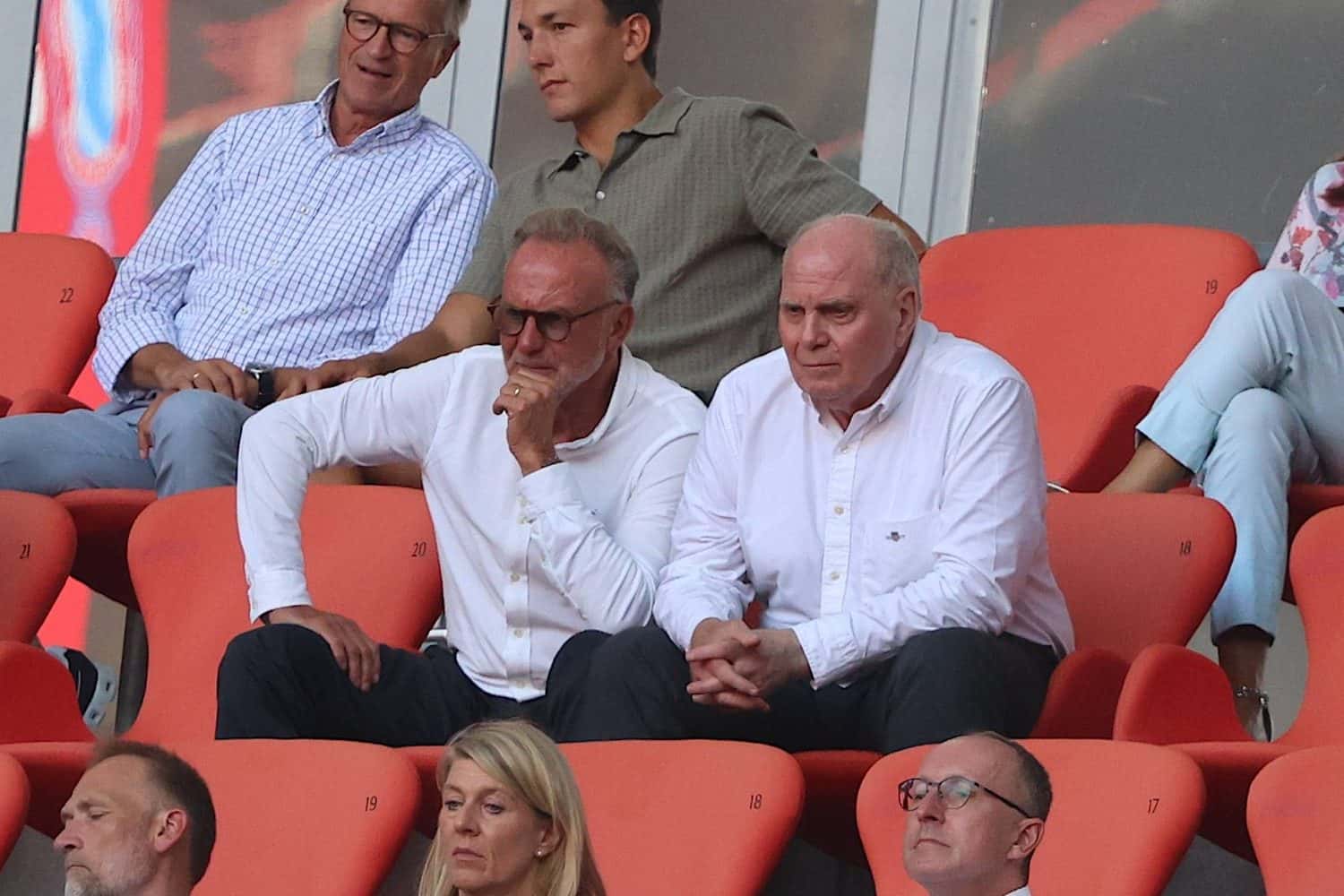
Ultimately, the entire debate is one thing above all else: unnecessary.
Musiala no longer has to prove to anyone that he can play soccer at an exceptional level. First, he needs to get healthy again, regain confidence in his body, and play regularly.
Whether he’ll once again be among Europe’s best players won’t be decided in interviews with Hoeneß, Dreesen, and Rummenigge—it’ll be decided on the field.
Those in charge should create the best possible conditions for him to do so.
That includes refraining from discussing his contract, his future, or his market value after every setback.
Hoeneß and Rummenigge have rendered great service to FC Bayern. That is precisely why they should know when public criticism is helpful—and when silence would be the better choice.
After all, the greatest damage in this matter isn’t currently being caused by Musiala’s injuries or his multi-million salary.
It stems from club leadership that is publicly blowing a problem out of proportion.