
Uli Hoeneß’s public statements about Jamal Musiala continue to spark debate. After Bayern President Jan-Christian Dreesen described the honorary president’s handling of the issue as “sensitive,” TV analyst Marcel Reif strongly disagreed. He believes that such matters should be resolved internally.
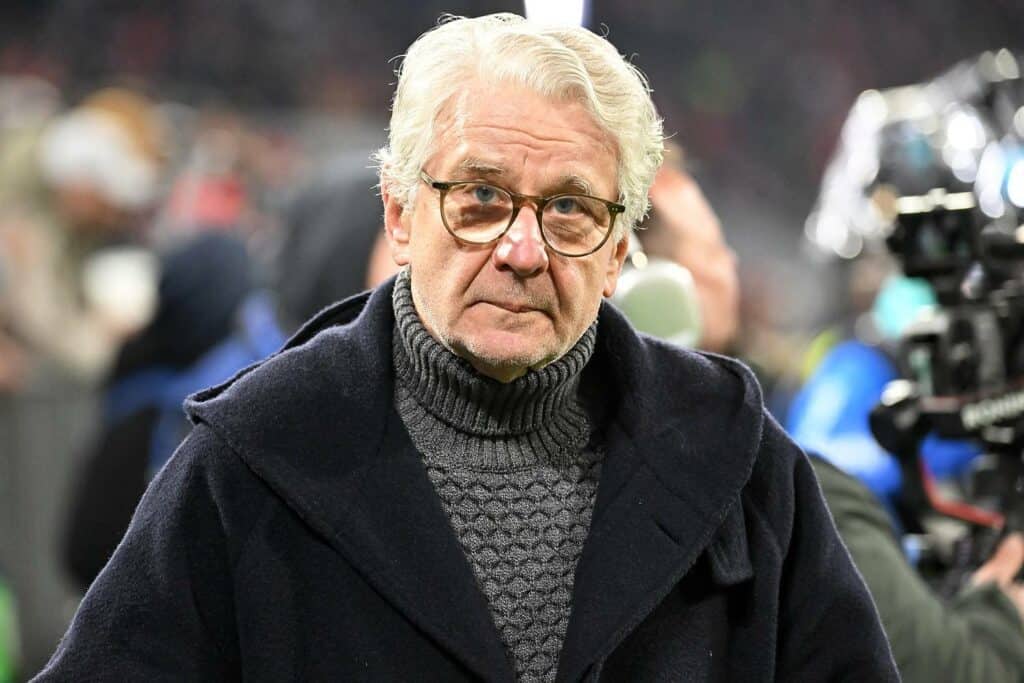
On the BILD show *Reif ist live*, the 76-year-old was asked about Dreesen’s assessment. Reif, however, was not impressed by Hoeneß’s defense. “Uli handled the issue sensitively—I don’t think so. He made it public. In my opinion, something like this doesn’t belong in the public eye in the first place,” the expert clarified.
His criticism was directed primarily at the approach Hoeneß had chosen. “Anyone who goes public with this is making a mistake. I’d tell him that in no uncertain terms.” At the same time, Reif acknowledged that Hoeneß is known for his own style: “Uli Hoeneß does whatever he wants. That’s why he’s Uli Hoeneß.”
The Bayern boss had recently commented critically on Musiala’s susceptibility to injury and also addressed his contract situation. Dreesen subsequently announced that he would be holding talks with the national team player.
Reif also sees the financial side of things
Despite all the criticism of the public communication, Reif emphasized that, in addition to the personal and athletic aspects, the financial dimension must also be taken into account. Musiala is one of FC Bayern’s top earners. If, due to his injury problems, he were permanently unable to fulfill his contract, the club would have to deal with the situation internally.
“However, if that proves impossible—and that is certainly a possibility—then, as an employee, he cannot fulfill his employment contract. In that case, the club must determine how to handle the situation internally,” Reif explained. At the same time, he made it clear that such considerations do not automatically need to be discussed publicly.
For the TV analyst, the manner of communication is therefore crucial. It goes without saying that Musiala’s situation must be discussed, and solutions must be sought together. In his view, however, Hoeneß’s public statement was not the right way to go about it.