

Bayern is keeping an eye on Brajan Gruda and Wael Mohya. But why is the Munich club interested in more creative offensive players, even though they already have Musiala and Karl?
On Friday night, Brajan Gruda showed why his development has caught the attention of FC Bayern. In the German national team’s 3-1 win in Serbia, the Leipzig player scored his first international goal. Joshua Kimmich provided the assist. Lennart Karl, on the other hand, watched Gruda’s goal from the bench.
From Munich’s perspective, this raises an interesting question: Why is Bayern pursuing a player who can fill roles for which Karl already offers a promising solution? Especially since, according to Sky, another talent—Wael Mohya—is on their radar, whom the club’s officials primarily see as a playmaker.
After all, with Jamal Musiala and Karl, Bayern already has two exceptional players in the attacking midfield. Ismael Saibari can also fill that position, and Michael Olise has the skills for it. The greatest additional need therefore seems to lie on the left wing.
Bayern looks at skills—the position alone isn’t enough
First, one must distinguish between interest and a concrete intention to sign a player. According to reports so far, the Munich club is monitoring the development of both players. This does not imply a targeted search for a new starting number 10, let alone a plan to sign Gruda and Mohya together.
According to the BILD podcast “Bayern Insider,” it’s Gruda’s versatility that’s particularly appealing. The 22-year-old is of interest for roles on the wings and in the center. Against Serbia, he started on the right wing and, with his goal, demonstrated that he can pose a scoring threat even from that position.
His example illustrates why the label “number 10” can fall short when evaluating a transfer candidate. Technical proficiency, vision, and the ability to find solutions under pressure from opponents are needed not only behind the striker. Against deep-lying opponents, Bayern needs such qualities on the wings and in the spaces in between as well.



The central attacking position, in turn, can offer young players a stage where precisely these strengths become particularly evident. There, they are often involved in combination plays, can set up teammates, and look to finish themselves. Which role will ultimately be the best fit at a top-tier club must therefore be evaluated separately.
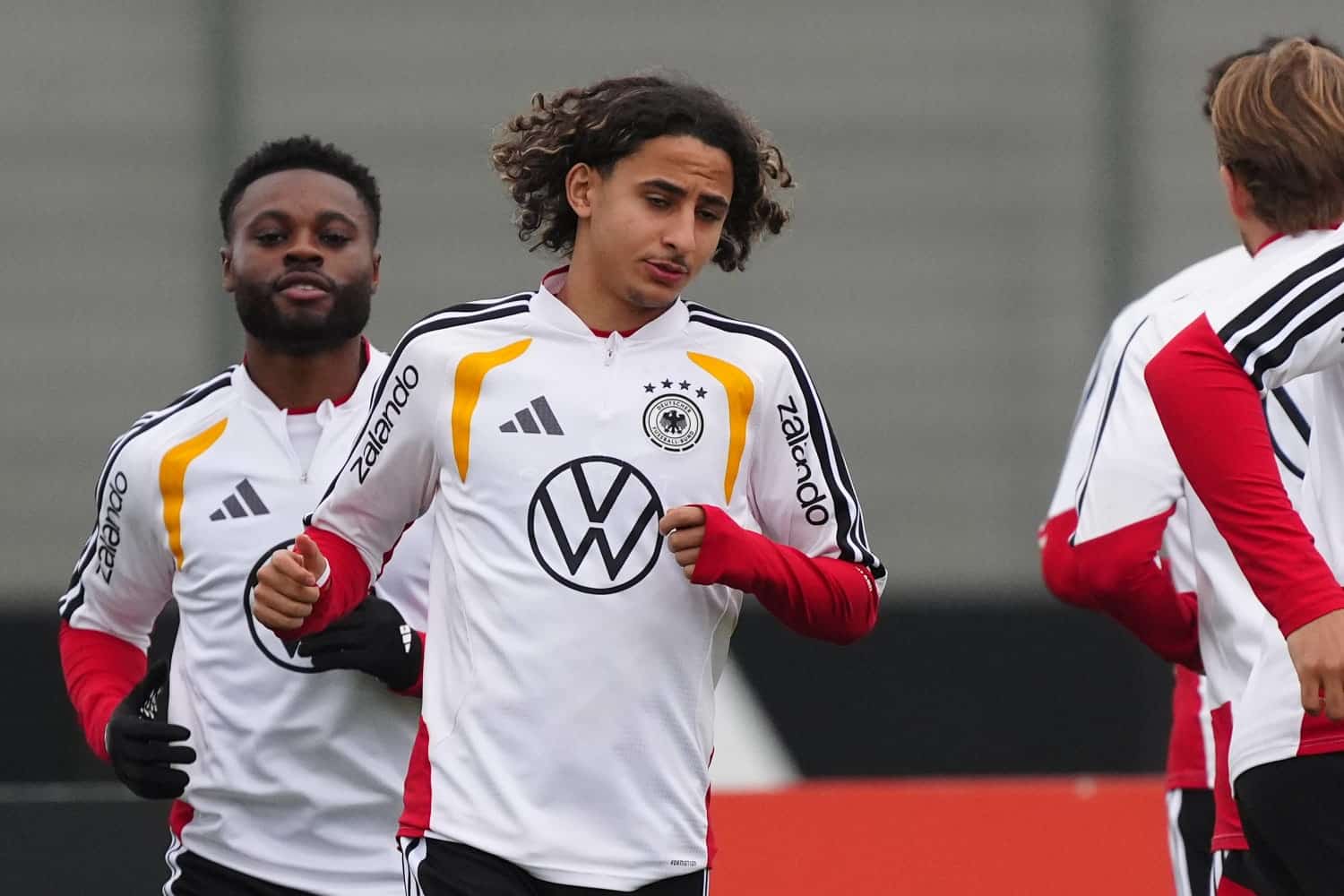
With Mohya, this question remains particularly intriguing. If Bayern truly sees the Gladbach player primarily as a number 10, there would need to be a convincing development plan for a transfer. Musiala’s quality and Karl’s recent resurgence must be taken into account, as must Saibari’s prospects following his injury.
Moreover, Mohya would by no means be easy to acquire. According to Sky, Leverkusen has shown the most concrete interest among German clubs, while Gladbach would like to extend his contract, which runs through 2028. The prospect of signing a sought-after talent alone would not be sufficient sporting justification for Bayern.
What matters most, therefore, is which gap a candidate could actually fill. A player who stands out on the right or in the center isn’t automatically the right fit to complement Luis Díaz on the left. Versatility must also be measured against the specific demands of a role.
Gruda’s international goal provides the next reason to closely follow his development. For Bayern’s transfer planning, however, more matters than a strong performance: The Munich club must identify a clear role within its own roster based on a player’s interesting skills. Only then will an exciting prospect become a meaningful addition to the team.