

Vincent Kompany is back at Säbener Straße. Several personnel issues await him at FC Bayern—partly because a lot has changed during his absence.
Vincent Kompany has resumed his duties at FC Bayern. The club confirmed on Tuesday that the head coach has returned to Säbener Straße. Following his absence due to illness, the Belgian can now prepare for the upcoming challenges on-site once again. He is also expected to return to the sidelines for the match against 1. FC Köln on November 20.
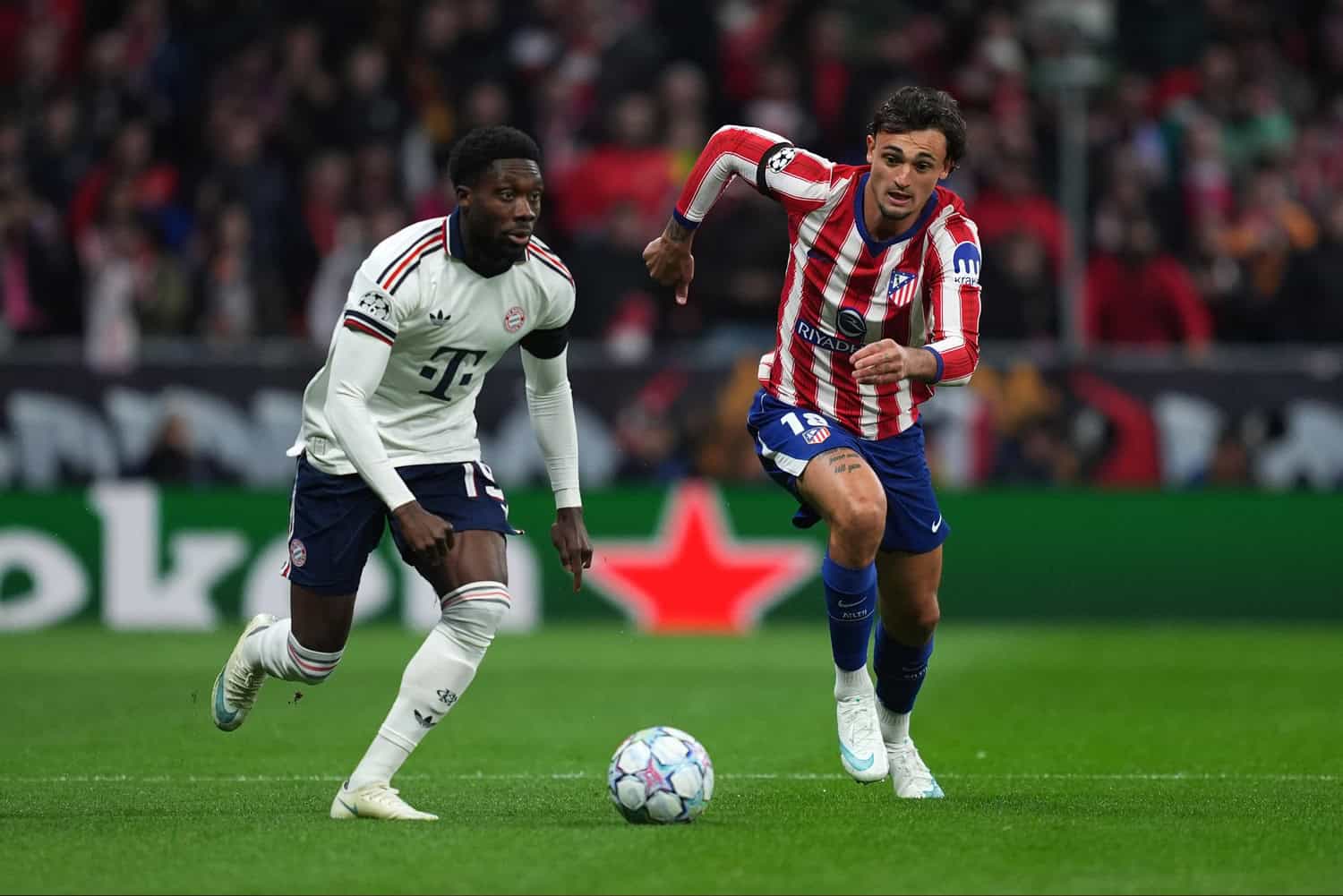
During his absence, Aaron Danks and René Maric, together with the rest of the coaching staff, successfully guided the Munich team through some difficult weeks. The 2-0 win at Atlético Madrid was followed by a 2-1 victory in Mainz. In the process, players proved their worth, positions shifted, and new opportunities emerged. Kompany must decide which solutions will hold up even when his roster once again offers more options.
This is particularly evident in the case of Lennart Karl. The 18-year-old scored in both Madrid and Mainz from a central role behind Harry Kane. Michael Olise started alongside him on the right wing. Karl has thus shown that his place in the starting lineup doesn’t have to depend on Olise taking a break.
With Jamal Musiala ’s expected return, however, competition for the number 10 spot will intensify. Kompany must manage Musiala’s reintegration carefully while also taking Karl’s recent surge into account. Simply slotting the youngster back behind Olise again would hardly do justice to his recent performances. Conversely, after his long break, Musiala needs playing time to regain his rhythm and confidence. An immediate decision to permanently establish a starting number 10 would therefore be unhelpful.
Returning players give Kompany new options for rotation
The lineup on the left side could also change. Sporting Director Max Eberl has indicated that Musiala and Luis Díaz could be available after the international break. The key factor remains how quickly both players can return to full fitness.
Díaz’sreturn would allow Alphonso Davies to return more frequently to his natural position as left back. There, Nathaniel Brown and Josip Stanisic provide additional options. Brown has recently helped out on the left wing and in central attacking positions as well. Kompany must weigh where Brown’s versatility is most helpful—and when to give him playing time as a left back again.


A similar question arises in central midfield. After recovering from his ailments, Aleksandar Pavlovic started alongside Joshua Kimmich in Mainz. Tom Bischof had previously impressed in Madrid and can take on multiple roles. For Kompany, the challenge is to give him a reliable role while also regularly taking some of the load off Kimmich and Pavlovic. Bischof’s flexibility is valuable, but it shouldn’t mean he’s solely tasked with filling gaps.
Added to this is the competition in central defense. Dayot Upamecano has established himself as the most important constant with strong performances. Alongside him, Minjae Kim and Jonathan Tah are vying for playing time. Kim started in Madrid, Tah in Mainz. Kompany must balance the need for a well-coordinated defense with the need to give players rest. The packed schedule provides a strong case for continuing to involve all three.
In goal, however, the immediate decision is dictated by Manuel Neuer’s injury. Jonas Urbig is needed and will have the opportunity to take on responsibility for several weeks. The more difficult question will come later: According to the current plan, Neuer is set to remain the number one once he has recovered. Kompany will nevertheless have to take Urbig’s performance up to that point into account in his sporting assessment.