

Uli Hoeneß’s comments about Jamal Musiala continue to spark debate at FC Bayern. While the honorary president has faced a lot of criticism for publicly expressing doubts about the 23-year-old’s performance, there are also those who can understand his position. The focus here is primarily on the financial aspects of the highly lucrative contract.
Musiala extended his contract in February 2025 through the summer of 2030. According to consistent media reports, the German national team player is said to earn around 25 million euros per year. Added to this is an exit clause that, under certain conditions, would allow the star forward to leave early.
For FC Bayern, the contract extension was an important signal at the time. Musiala was one of the most sought-after players in Europe and was expected to become the face of the record-breaking champions in the long term. To keep him, club officials pushed their financial limits. However, in light of his health setbacks, there is now increasing discussion about the financial risks of this decision.
Hoeneß addresses a fundamental problem
Hoeneß recently caused a stir with a remarkable statement: “What he’s capable of now is no longer what’s in the contract.”
Many interpreted these words as criticism of Musiala. However, the statement can also be seen as pointing to a fundamental problem in modern professional soccer.
During contract negotiations, players and their agents try to secure the highest possible salaries, long-term financial security, and flexible exit clauses. The clubs, in turn, bear a significant portion of the financial risk if a player is unable to perform as expected due to injury or other reasons.
As reported by *kicker*, Hoeneß is said to be hoping for a financial concession from Musiala as long as the player is unable to play.


This is not a matter of a legal obligation on the player’s part. FC Bayern stands by the agreed-upon contract terms. Rather, the question is whether voluntary concessions might be conceivable in the event of extraordinary circumstances.
Is Olise’s future also at the heart of this debate?
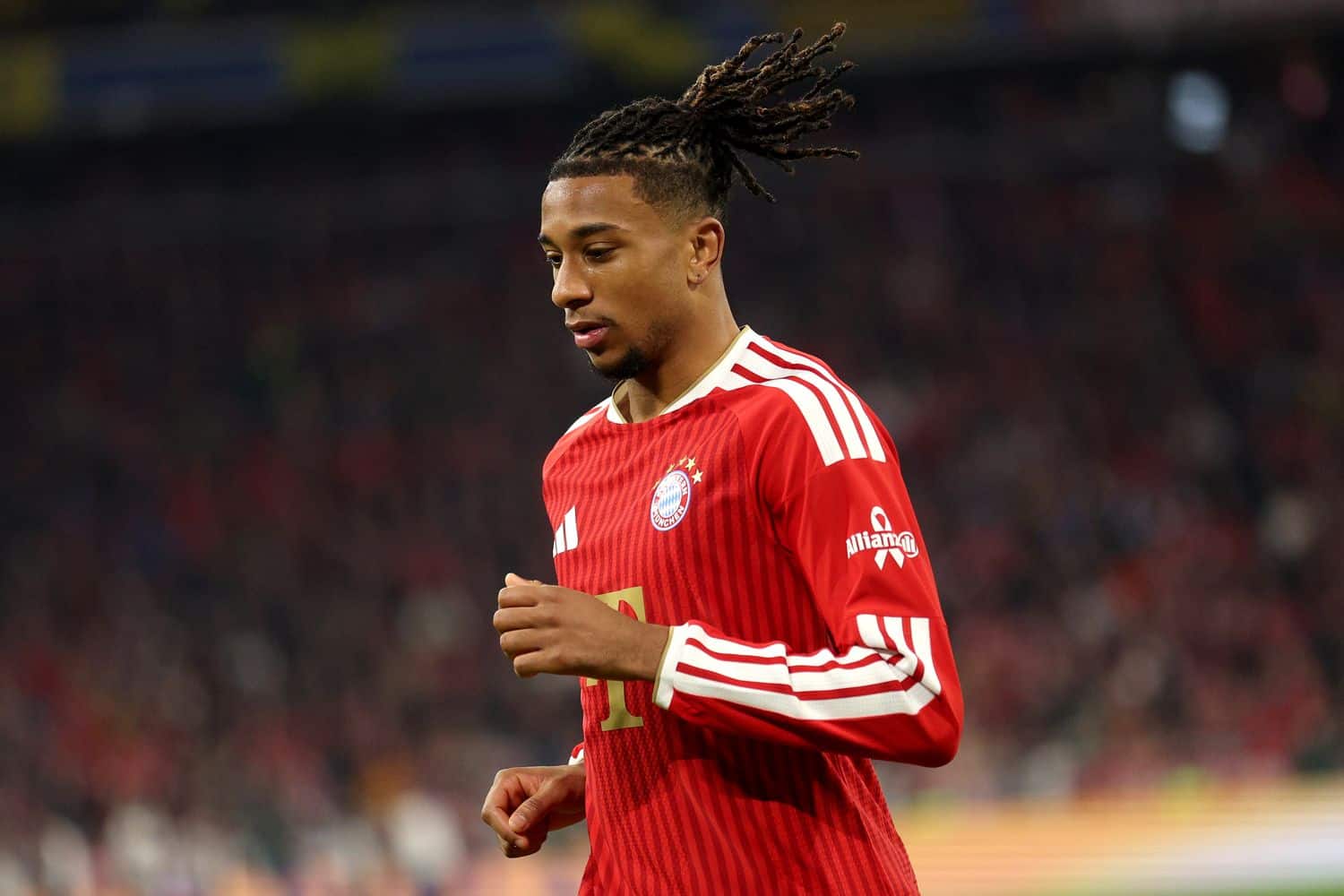
Another aspect is interesting in this context. As t-online reports, Musiala’s salary is said to have been explicitly discussed during the most recent contract negotiations with Harry Kane.
The Englishman has since extended his contract through 2029 and is said to have replaced Musiala as Bayern’s highest-paid player.
As a result, Munich’s salary structure could also play an important role in future contract negotiations.
Michael Olise, in particular, is likely to come into focus in this regard. The Frenchman is one of the record champions’ key players and could also aim for a salary in the range of 25 million euros in the event of a potential contract extension.
Whether Hoeneß’s recent statements are actually intended to create financial leeway for a new contract with Olise, however, is pure speculation. There are no concrete indications of such plans or of an upcoming renegotiation with Musiala at this time.
Between Loyalty and Financial Responsibility
Regardless, the situation remains complicated for FC Bayern. After several health setbacks, Musiala is working hard on his return. Coach Vincent Kompany has recently expressed his full support for the national team player.
At the same time, club officials must keep the club’s long-term financial obligations in mind.
The criticism of Hoeneß’s timing and choice of words is therefore entirely understandable. Especially during a difficult period of health challenges, Musiala needs support and trust.
Nevertheless, the financial issue raised by the honorary president is not fundamentally unfounded.
A club like FC Bayern must weigh the financial risks associated with long-term contracts, even for its biggest stars. It is legitimate for players and their agents to represent their interests. But it is just as legitimate for the club to take its financial responsibilities seriously.
It will be crucial to conduct this discussion in the future in a way that does not put additional pressure on Musiala. After all, the shared goal remains the same: the national team player should make a full recovery and return to his former form.