

Aleksandar Pavlovic is one of the big winners of the first international match window under new national team coach Jürgen Klopp. The Bayern pro impressed in both the 2-0 win over Serbia and the 0-0 draw in Greece, putting himself in a strong position to compete for a starting spot in the DFB midfield.
The 22-year-old also appears to be benefiting from Klopp’s new system. In the 4-3-3 formation, Pavlovic played as a central defensive midfielder behind two more attack-minded midfielders. This allowed the young Bayern player to showcase exactly the qualities that set him apart in Munich as well.
“This midfield trio of Pavlovic, Bischof, and Wirtz is somewhat of a revelation in these international matches. It looked really good,” emphasizes SPORT1 chief reporter Stefan Kumberger in the podcast *Die Bayern-Woche*.
Pavlovic Becomes a “Passing Machine”
Pavlovic was a constant option in Germany’s build-up play, repeatedly dropping between the lines to provide structure. At the same time, he increasingly took on responsibility for initiating attacks.
The fact that Pavlovic functions so well in Klopp’s system could be primarily due to his clearly defined role. As the sole defensive midfielder, he doesn’t have to constantly switch between different tasks. He can organize play in front of the defense, cover spaces, and then cleanly move the ball to the next line.
This is an interesting development, especially when compared to the World Cup. There, Pavlovic was unable to reach his full potential to the same extent. When playing alongside Felix Nmecha, the responsibilities in the center were distributed differently.
Klopp’s 4-3-3, on the other hand, seems to suit the Munich native well. The central player in front of the defense must be a reliable option to pass to, remain calm even under pressure, and dictate the rhythm of the game. Pavlovic brings exactly these skills to the table.



Is Pavlovic the perfect defensive midfielder for Klopp?
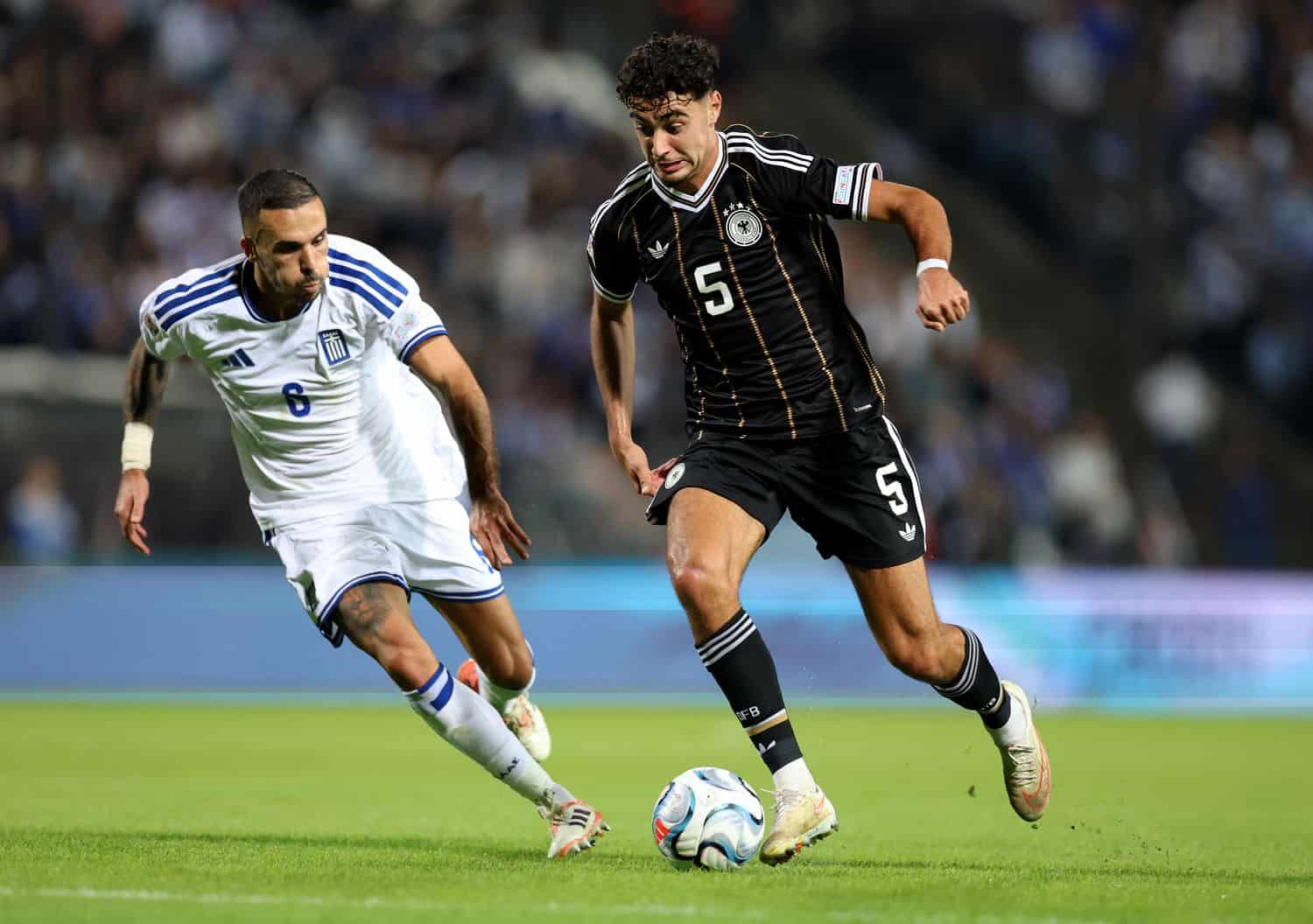
This inevitably creates an interesting dynamic with Joshua Kimmich. The DFB captain is much more versatile and can take on different roles in midfield. Pavlovic, on the other hand, may embody the classic defensive midfielder more naturally.
“For Klopp’s 4-3-3, you need a defensive midfielder you can rely on. Pavlovic can do that,” says Kumberger.
Added to this is the Bayern youngster’s consistency. Julian Nagelsmann had already once emphasized that Pavlovic plays with a “no-nonsense” approach—in a positive sense. Major fluctuations in his performance are rare. Even on days when he’s less noticeable, he provides stability with his ball control and positioning.
After just two convincing performances, however, it would still be premature to declare Pavlovic the new starting defensive midfielder. His performances against Serbia and Greece have, however, shown Klopp another exciting option.
The DFB’s new system could be a major advantage for Pavlovic. Instead of forcing him into a role that demands as many tasks as possible at once, Klopp can make targeted use of his greatest strengths. Should the national team coach stick with the 4-3-3 formation long-term, the Bayern Munich player could become a central pillar of his midfield.