

FC Bayern has struck a massive financial deal with Viessmann. The German record champions are said to have received around 250 million euros from the new shareholder. But what do the Munich-based club need the additional capital for? Former CEO Oliver Kahn has now commented on the agreement, also addressing the future of Harry Kane and Michael Olise.
On Sky’s soccer talk show “Triple,” Kahn made it clear that he does not suspect any financial difficulties at FC Bayern behind the new investor’s entry.
“I can’t imagine that they’ve taken on a new partner because there are any liquidity issues or other problems,” explained the former national team goalkeeper.
The 57-year-old also ruled out a potential crisis as a motive. Rather, Kahn sees collaboration with strategic partners as a key component of the Munich club’s economic success.
Kahn Asks a Crucial Question About the Bayern Deal
For the former Bayern boss, what’s particularly interesting is how the record champion will use the additional millions in the future. “Of course, the question arises as to what the money will ultimately be used for. There are always a few clichés about strengthening the equity base and so on. But it will certainly be interesting to see where the money goes and whether it will be invested.”
Kahn pointed, among other things, to the need for investment at Säbener Straße. The Munich club must continuously modernize its infrastructure to keep pace with European competition in the long term.
However, the former CEO sees yet another area where financial demands are steadily rising: the professional roster.



“It’s definitely not going to get any cheaper.”
The salaries of top international stars, in particular, are posing ever-greater challenges for Europe’s top clubs.
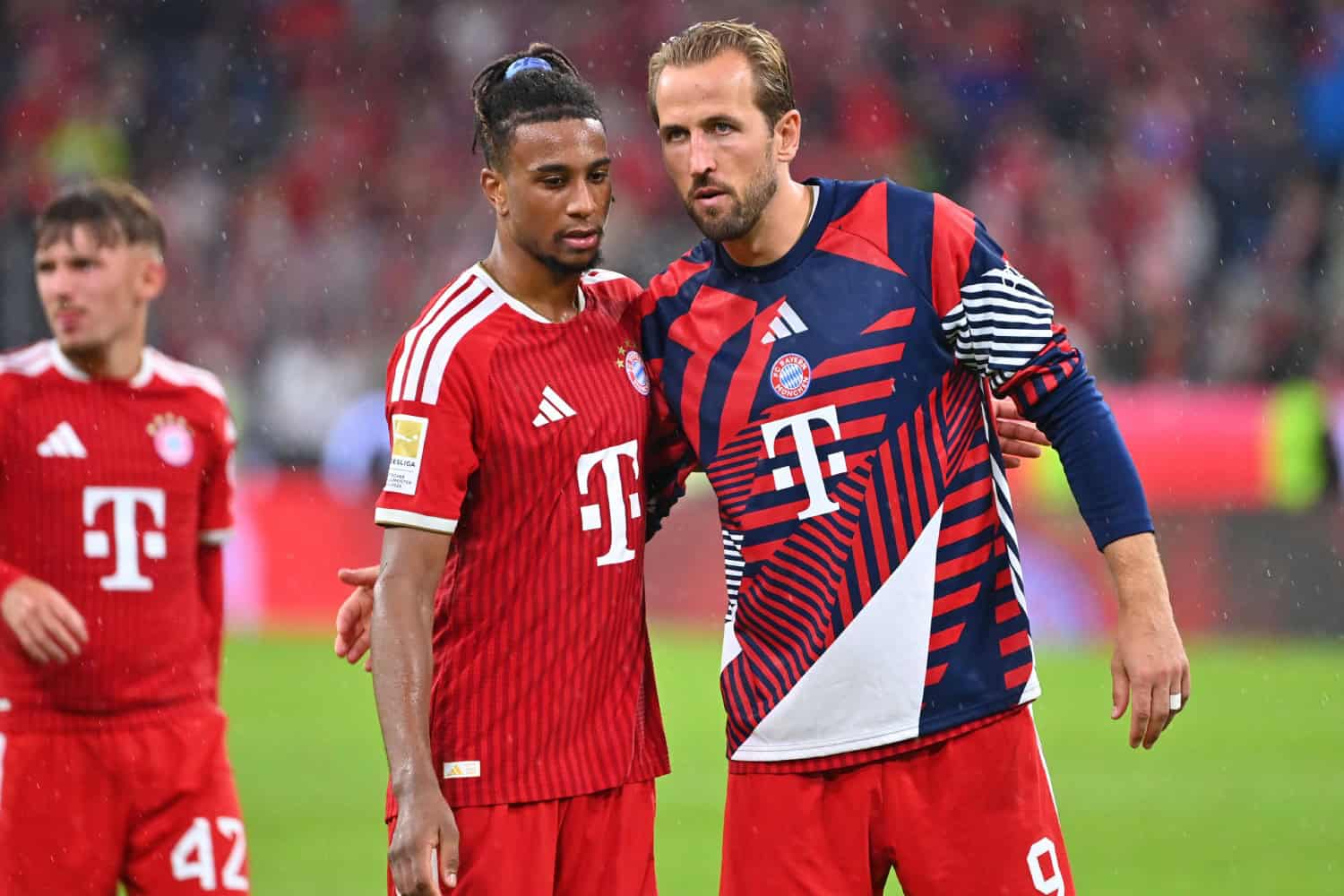
Kahn specifically mentioned two key players at FC Bayern. “It’s definitely not going to get any cheaper to extend Harry Kane’s contract or keep Michael Olise. These top players are in demand at Europe’s absolute top clubs, which have unlimited financial resources.”
Especially when it comes to securing the long-term commitment of its most important players, the record champion could therefore benefit from additional financial resources.
“And I believe that generating additional financial resources in this context is, in principle, not a bad thing,” Kahn emphasized.
Whether the millions from Viessmann will actually be used for player contracts, however, remains to be seen. Bayern President Herbert Hainer recently stated that the revenue will initially be invested conservatively and is earmarked in particular for future infrastructure projects.
With Viessmann, FC Bayern now has a fourth strategic shareholder alongside Adidas, Audi, and Allianz. FC Bayern e.V. continues to hold a majority stake of 70 percent.
For Kahn, the investment is therefore understandable in principle. From his perspective, however, the crucial question remains how the Munich club will use the additional capital in the long term.