
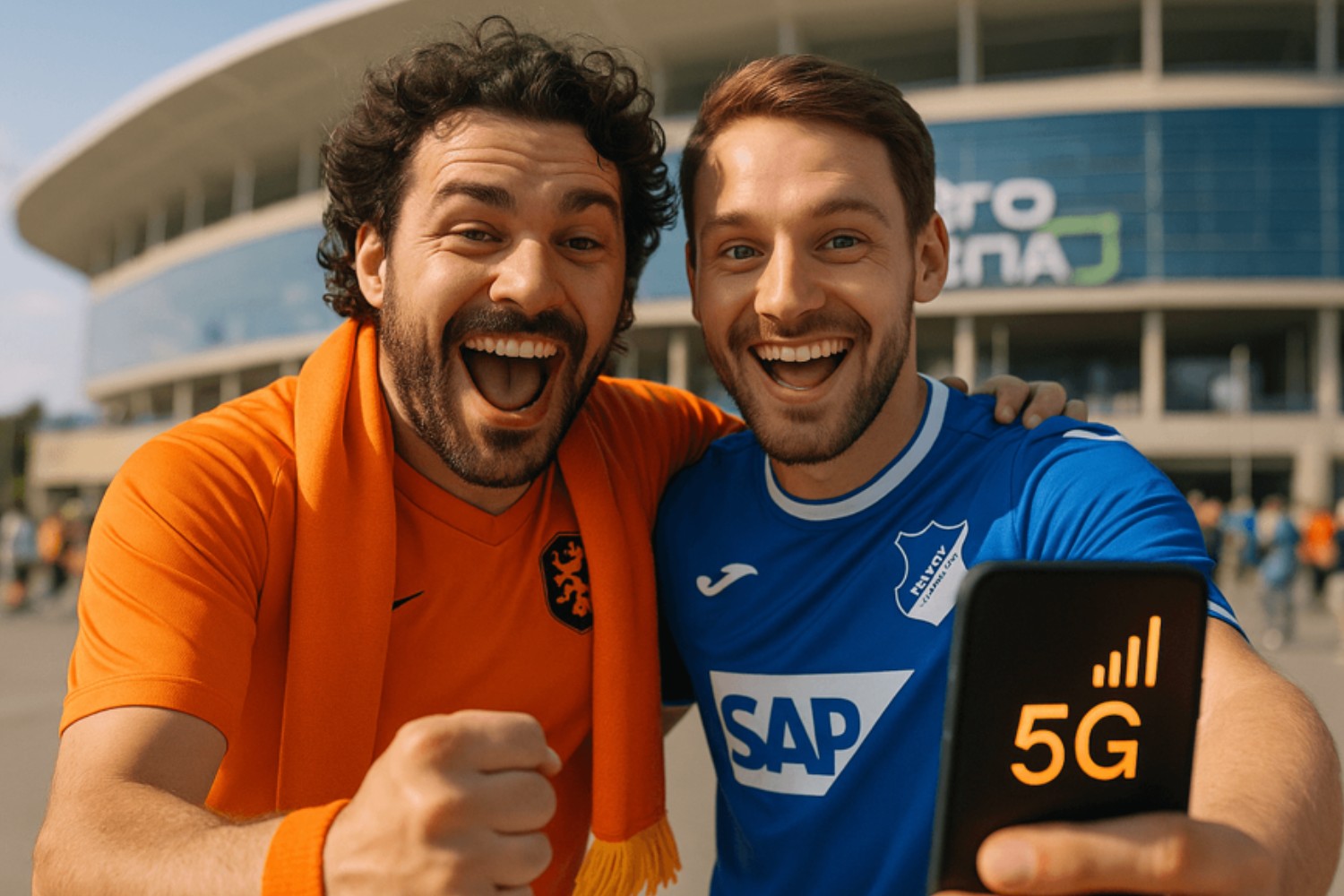
The 2026 World Cup still sounds a long way off, but anyone who has ever traveled to a major tournament knows that the earlier the planning is done, the more relaxed the trip will be. Three host countries (USA, Canada, Mexico), countless cities, different rules – it’s not a weekend trip to Vienna, but rather a small project
It’s worth clarifying the digital basis right at the beginning: how do you get cheap internet access on site, how do mobile tickets work, which apps do you really need? A specialized eSIM package for the 2026 World Cup takes away a lot of these worries because it tailors the internet, country combination and data volume directly to the tournament period
Why internet planning is more important than the third jersey variant
Without a stable mobile internet connection, travelling to the World Cup will be exhausting: digital tickets, maps, Uber, stadium admission, security information – everything runs via apps. Traditional roaming from your home provider can quickly become absurdly expensive in North America. Local prepaid SIMs may be cheaper, but they mean time and nerves at the airport or in the store, often with passport copying and language barriers
eSIM solves exactly this problem. You book your data plan in advance, scan a QR code and are online when you land. This is worth its weight in gold, especially for a multi-country trip like the 2026 World Cup. Many packages cover the USA, Canada and Mexico in one plan – without having to constantly change cards
With a solution such as the Yesim eSIM, you don’t have to trawl through countless local offers. You select the data package and time period in advance, install everything at home and concentrate on soccer instead of the jungle of tariffs when you get there
The most important advantages of an eSIM for your World Cup trip
eSIM is no longer hype, but simply a practical everyday feature on modern smartphones. eSIM profiles offer a few very specific advantages for a trip to the World Cup
- No physical card exchange
No fumbling with paper clips at the gate, no fear of losing your SIM at home. Everything runs digitally directly in your cell phone. - Immediately online after landing
You activate many eSIMs before departure. Switch off flight mode and you’re already online in the terminal: call up tickets, check directions to your accommodation, call a driver. - Multiple profiles in parallel
The home number remains active (for banking text messages or emergencies), the eSIM provides data. You don’t have to decide, you simply combine them.
Practice: How eSIM, tickets and apps work together
Imagine a typical match day. You wake up in your hotel in New York and head to the stadium in the evening
- You briefly check your eSIM data in the Wi-Fi, everything is working.
- Your World Cup tickets are stored in the official ticket app – you download them offline to your cell phone in case there’s no signal in the stadium network.
- Use the navigation app to plan your route: subway, ridesharing or shuttle? Real-time data is essential.
- The QR code is scanned at the stadium gate and the app compares everything online with the system. Often nothing works offline.
- After the game, you coordinate with friends, look for a bar nearby, maybe order a cab – it’s all data-based.
Without a stable connection, each of these steps is more complicated. With a pre-installed eSIM, it’s routine
Then there are the everyday things on the go
- Translation apps if you need to ask something quickly in Mexico
- Banking apps for spontaneous transfers or emergencies
- Cloud backups for photos in case you do lose your phone
All of this simply makes more sense with a reliable data package
Tickets: where to buy them and how to back them up
Unfortunately, there are always nasty surprises when it comes to tickets. A few basic rules remain
- Buy from official channels or authorized partners. Dubious resale platforms are risky, especially for a global event.
- If possible, use the official app in which tickets are linked to your account. Screenshots are increasingly being rejected.
- Load tickets onto your cell phone before the match day and – if the app allows it – also into a wallet or as an offline ticket.
And yes: make sure your battery is working. Pack a power bank, don’t take your phone into the stadium with a 5 percent charge. Even the best digital ticket is useless without power
Security: stay smart on the move
Safety is not just a question of police presence or stadium security, but also of digital habits
A few basics that really help when traveling to the World Cup
- Secure your cell phone with a PIN, Face ID or fingerprint
- A second device or at least a cloud backup for important documents (passport scan, insurance, emergency contacts)
- Sensitive log-ins (bank, email) only via mobile data if possible, not via open WLANs
- Save local emergency numbers and addresses of consulates or embassies
This is where mobile Internet plays a role again: the less you hang out in unfamiliar cafés in semi-open WLANs, the lower the risk of data theft. An eSIM with sufficient data volume is ultimately also a security tool
In short: eSIM vs. alternatives
Of course there are alternatives
- Classic roaming: convenient, but almost always too expensive for long-distance travel.
- Local prepaid SIM: cheap, but cumbersome as soon as several countries are involved.
- Other eSIM providers: often similar in approach, but with differences in app quality, support, tariff structure and coverage.
The sticking point is the combination of price, simplicity and coverage. For the 2026 World Cup, it is particularly important that the USA, Canada and Mexico are included in a sensible package wherever possible and that activation is also feasible for less tech-savvy people. This is precisely where specialized World Cup packages and a clear app interface score points
FAQ on the eSIM at the 2026 World Cup
In how many countries does a Yesim eSIM work?
Yesim’s eSIM tariffs cover different regions depending on the package – from individual countries to larger zones. Packages that combine the USA, Canada and Mexico are particularly interesting for the 2026 World Cup
How does Yesim differ from other eSIM providers?
Yesim’s approach is relatively straightforward: open the app, select a country or region, choose a data package, scan the QR code, done. The tariffs are clearly structured, you can keep an eye on your usage and don’t have to wade through hidden options. For events such as the World Cup, there are special packages with a duration and data volume tailored to the duration of the tournament
Do I still need a physical SIM card?
In most cases: yes, but for a different reason. The physical SIM usually remains your home number – for calls from your home country or text messages from the bank. The eSIM takes over the data supply when you are on the move. Many travellers are best off with this combination: at home as usual, data via eSIM when travelling, without having to change the number
Conclusion
World Cup trips are intense: lots of impressions, new cities, a full program. The less background noise due to technical and organizational problems, the more space there is for what it’s all about: soccer and experiences
If tickets come from secure sources, your cell phone is well supplied via eSIM and you follow a few safety rules, the 2026 World Cup will not be a stressful project, but exactly what it should be – a unique trip between stadiums, cities and stories that will be told for a long time to come