

FC Bayern had to settle for a scoreless draw against Hamburger SV. But in the very last minute of the match, of all times, Munich should have been awarded a penalty kick. That’s the assessment of referee expert Manuel Gräfe, who sharply criticized both the on-field decision and the lack of VAR intervention.
While Joshua Kimmich ’s red card was the main topic of discussion following the 0-0 draw at HSV, another controversial incident occurred immediately before the final whistle.
During one of Munich’s final attacks, Luis Díaz went down in the Hamburg penalty area following a tackle. HSV defender Martin Adeline had stopped the FCB attacker—without the latter even touching the ball. However, referee Bastian Dankert’s whistle remained silent. The video assistant referee also did not intervene.
For former Bundesliga referee Manuel Gräfe, the decision is incomprehensible. In his analysis for BILD, the 53-year-old made it clear that Munich should have been awarded a penalty kick.
“That’s a clear penalty.”
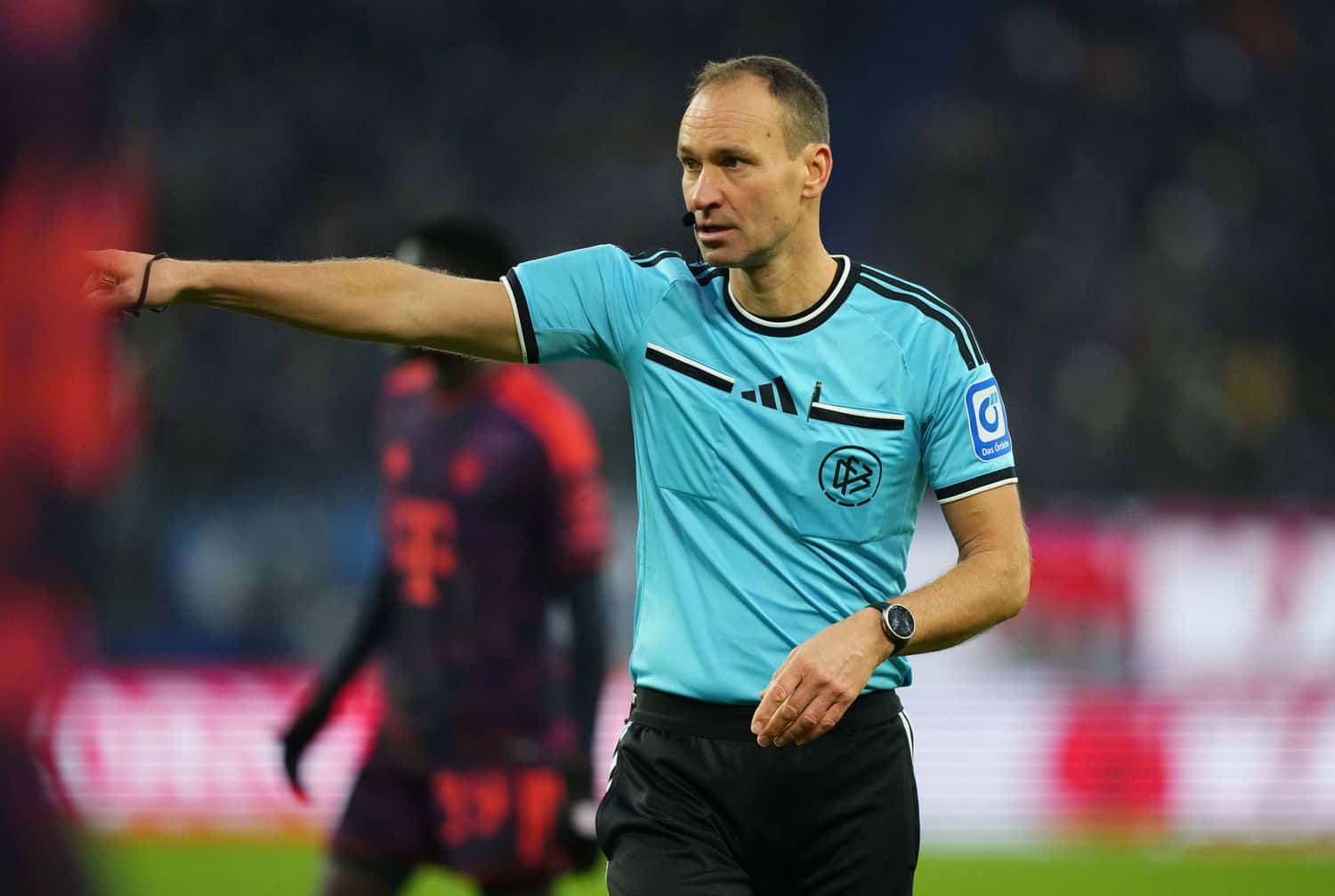
From Gräfe’s perspective, the Hamburg defender was clearly too late in his challenge on Díaz. The defender blocked the Colombian by sticking out his leg, striking him in the knee and leg area in the process. “The point of contact is clear. He doesn’t go down beforehand; rather, he’s clearly struck, clearly blocked, and his movement is disrupted,” Gräfe explained.
The former FIFA referee did acknowledge that Díaz may have welcomed the contact. However, this does not change the assessment of the foul. “That’s a clear penalty; you have to call it,” emphasized the BILD expert, referring to the video assistant referee’s failure to intervene.
Kompany was surprised: “That wasn’t a penalty.”
Curiously, Bayern head coach Vincent Kompany, of all people, sees the play quite differently: “That wasn’t a penalty. It wasn’t a foul on Díaz either. Why do I say it wasn’t a penalty? His foot dug into the ground. You can’t call a penalty for that kind of contact. No. No complaints,” Bayern coach Vincent Kompany emphasized to DAZN after the final whistle.



Jonathan Tah, meanwhile, didn’t want to take a firm stance: “Fifty-fifty. I understand that our bench is upset about it. It certainly looks that way. But in the end, I’d say: fifty-fifty. There are referees who might decide to call it, there’s VAR, which might step in—or sometimes not,” he explained on Sky.
Former referee Patrick Ittrich made it clear that the play isn’t easy to judge: “The defender puts his foot out—and Luis Díaz runs into him, trying to get past him. You can tell by the way he falls. You could call that, but you don’t—and that brings us back to the point that everything has to be judged the same way: It’s stoppage time, so as a referee, you have to be 1,000 percent sure. It’s a 50-50 call. You’re better off not calling it, especially in stoppage time. The game ends in a draw, and the referee stays out of it—he doesn’t decide the outcome.”
Gräfe voices fundamental criticism of VAR
For Gräfe, the incident in Hamburg exemplifies a fundamental problem with the use of the video assistant referee. In his view, too many incorrect calls are currently being classified as justifiable referee decisions.
The 53-year-old called for urgent retraining on distinguishing between justifiable decisions and clear mistakes.
While Gräfe explicitly deemed the VAR’s intervention in Kimmich’s red card justified, he believes the video assistant should also have intervened without hesitation during Bayern’s final attack. “And it doesn’t help to sugarcoat things—you have to call it what it is,” Gräfe emphasized.
Particularly bitter from the perspective of the German record champions: Had they converted the penalty kick, Munich could have won the match at the last minute despite being a man down for a long time and ended their winless streak. Instead, FC Bayern went without a competitive win for the third time in a row.