

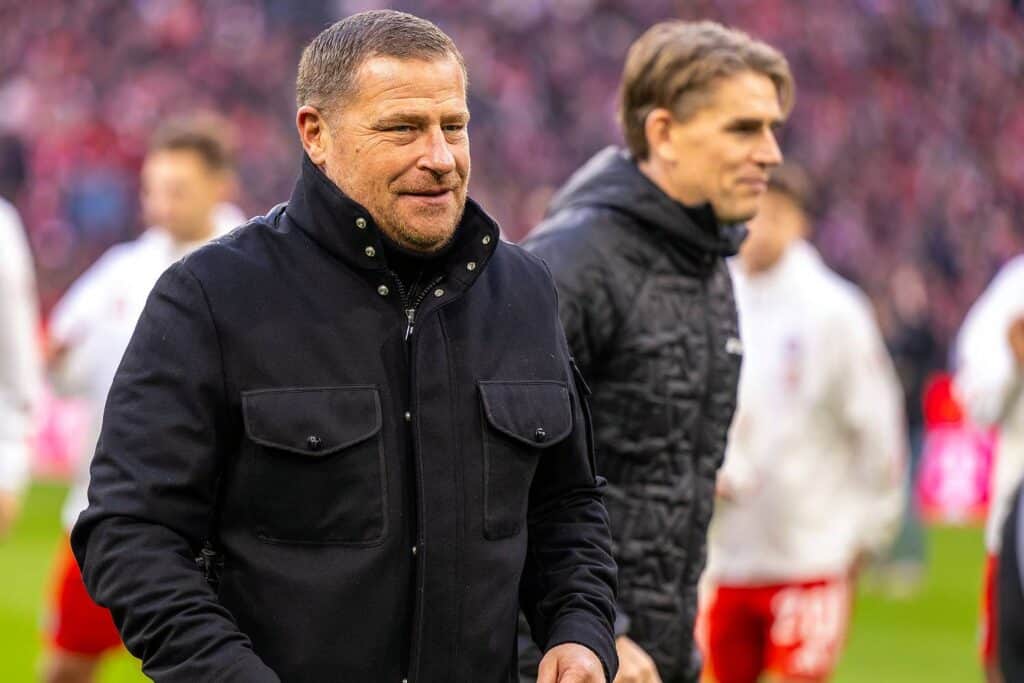
Transfer fees are a constant source of discussion in the modern transfer business – especially when players on a free transfer are paid large sums. Bayern’s sporting director Max Eberl has now explained why these payments have recently become increasingly important
In an interview with SPORT1, Eberl put the development into perspective and referred to structural changes in the soccer business: „The sums have certainly changed and in times of transfer journalism there is also more discussion about them, but bonuses have always played a role in such negotiations. Especially since the Bosman ruling in 1995, they have become increasingly important and all parties involved are playing their cards close to their chests,“ said the Bayern boss
The background: since the Bosman ruling, players have been able to move on a free transfer at the end of their contract. Whereas in the past, it was usually only players who had been discarded who left the club without a transfer fee, nowadays top performers also deliberately enter the final year of their contract – with the aim of making their market position worthwhile
Eberl: „Many players take the risk“
Eberl explains this mechanism: „Many years ago, a player was usually only free on transfer if he was discarded by the club. Nowadays, many players simply take the risk of going into the last year of their contract and then see what happens. That gives the transfer fees a special significance.“
This is a particularly sensitive issue for financially strong clubs such as FC Bayern. Although the traditional transfer fee is saved in the case of free transfers, hand money, consultancy fees and salary demands often increase instead. The bottom line is that the financial burden shifts – it does not disappear
Eberl’s statements come at a time when several contract talks are underway or have recently been held in Munich. These are not just about salaries, but also about bonuses, signing bonuses and long-term conditions.