

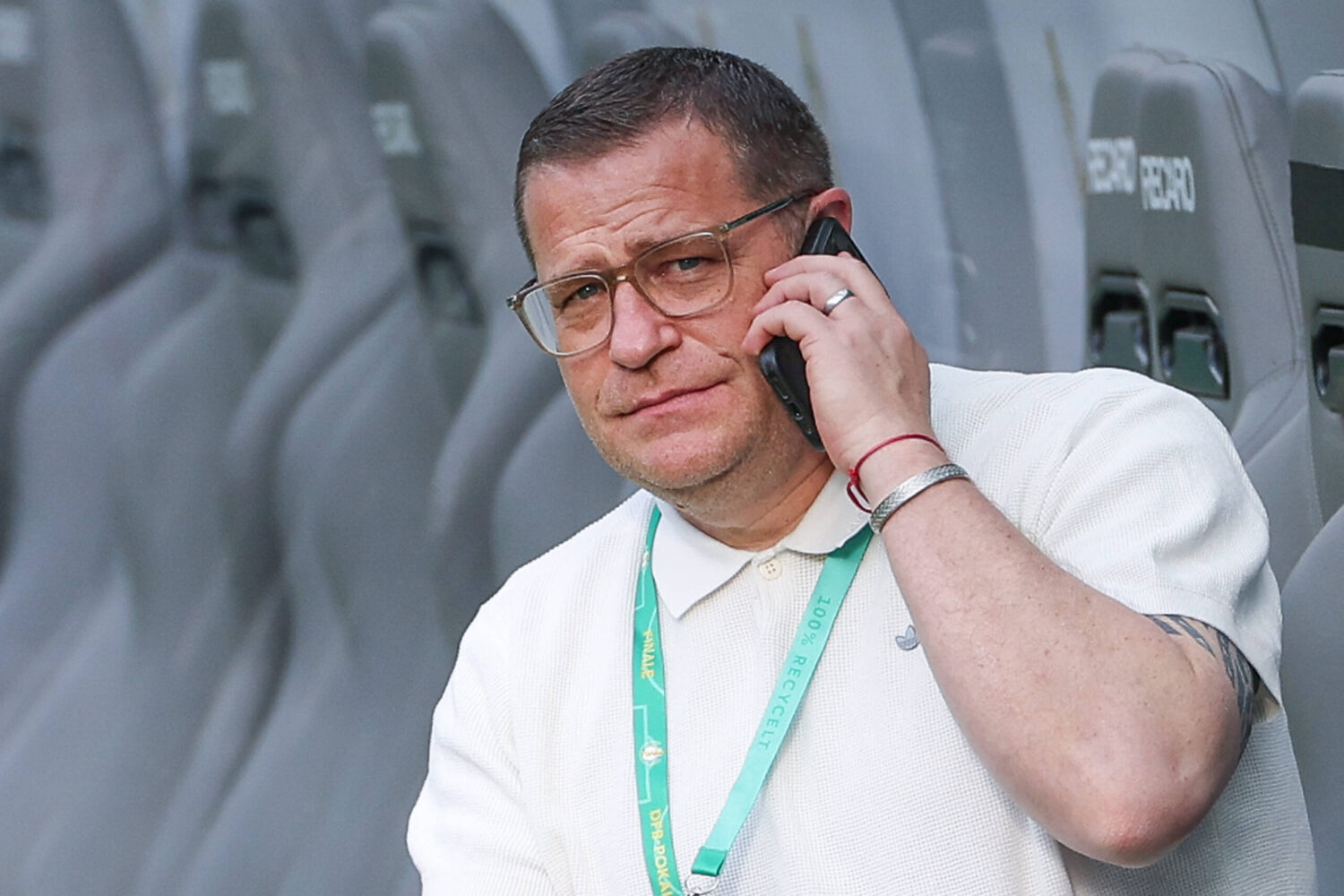
This summer, once again, the FC Bayern management team led by Max Eberl faces the task of generating revenue in the transfer market. Investments are possible, but the club’s financial balance must be maintained.
Some fans may certainly find the strict guidelines a bit hard to get used to. After all, the record-holding champion is one of the most financially stable clubs in the world—and that’s without a major investor or the Saudi Arabian sovereign wealth fund backing it.
Nevertheless, these guidelines aren’t necessarily about FC Bayern wanting to skimp or hoard money. On the contrary, these measures are intended to continue laying the foundation for long-term sporting success.
This can be explained in more detail on several levels. And ultimately, it makes it easier to understand the measures.
Salary savings and revenue as a key foundation
It was clear from the very beginning that things wouldn’t be easy for Max Eberl at FC Bayern. After all, the sporting director was tasked with cutting payroll costs. The problem: When he took office, there were several players on the roster who were earning a lot of money but were no longer delivering the performances that had been expected of them. In short: Eberl had to deal with players who were on top contracts and didn’t want to leave Bayern.
Pushing for the transfer of such players when the market isn’t offering much and the players don’t want to leave at all is complicated. The solution was free transfers, such as Leroy Sané in 2025 or Leon Goretzka this summer. Kingsley Coman, who was also earning a lot of money, was sold, while other players, such as Joao Palhinha, were loaned out. This provided enormous relief for the club’s finances.
The fact that millions were also saved on contract extensions—such as Serge Gnabry’s—is another advantage. Eberl managed to convince Gnabry by promising him a lower base salary but more performance-based bonus payments. Konrad Laimer’s salary adjustment is also modest. The Austrian is set to sign shortly for a salary only slightly higher than before.



More flexibility for FC Bayern
However, FC Bayern’s supposed austerity measures aren’t really that at all—it’s more a matter of redistribution. The club doesn’t necessarily want to pay significantly lower salaries, but rather pay the right players. Take Harry Kane, for example, with whom talks about a contract extension are scheduled to take place after the World Cup. The club also wants to extend Michael Olise’s contract and offer him a substantial pay raise.
But that’s only possible if budget savings are made elsewhere. This redistribution allows Bayern to invest more in the players who consistently make the difference.
In addition to savings on salaries, Bayern also aims to sell players on loan, such as Joao Palhinha, Bryan Zaragoza, and Alexander Nübel. The club is also open to discussions regarding players like Hiroki Ito. However, this isn’t simply because they want to avoid a transfer loss.
The real reason is rather to remain financially stable and strengthen the club’s economic foundation to such an extent that they can simply say a categorical “no” when teams like Real Madrid or PSG come knocking for a player like Olise.
That is precisely what has set Bayern apart in the past. Whether it was Franck Ribéry or Thomas Müller: if Bayern doesn’t want to sell, then the player isn’t sold. And with their current strategy, they’re ensuring that this remains the case.