

The discussions surrounding the 2026 World Cup are slowly gathering pace – but Joshua Kimmich wants to know as little about it as possible. The captain of the German national team and FC Bayern’s leading player took a clear stance after the Champions League win against Union Saint-Gilloise, drawing lessons from the past
After FC Bayern’s 2-0 win in the premier class, Kimmich was asked about the recent boycott rumours surrounding the 2026 World Cup in the USA, Mexico and Canada. The first political voices had suggested that Germany should stay away – as a reaction to the USA’s aggressive foreign policy and statements by President Donald Trump. Kimmich responded with a smile, but also with a clear stance: „I’m no longer taking part in the political discussion.“
Lessons from Qatar shape Kimmich’s attitude
The 29-year-old made it clear that his reticence is no coincidence, but is based on past experience. The 2022 World Cup in Qatar in particular had left its mark on him. „We noticed that it doesn’t help if we players express ourselves too politically,“ the Bayern star explained openly
Kimmich is one of the most reflective voices in German soccer and has been quite willing to address social issues in the past. This makes his conscious decision to distance himself before the next major tournament all the more remarkable. The focus should clearly be on the sport – also to avoid dragging the team back into a maelstrom of debates, expectations and external pressure
At the same time, the midfielder made it clear that professional footballers are not completely free of responsibility. „It is also our responsibility to express ourselves to a certain extent,“ he admitted. But this is precisely where he draws the line
Responsibility yes – but not on the pitch
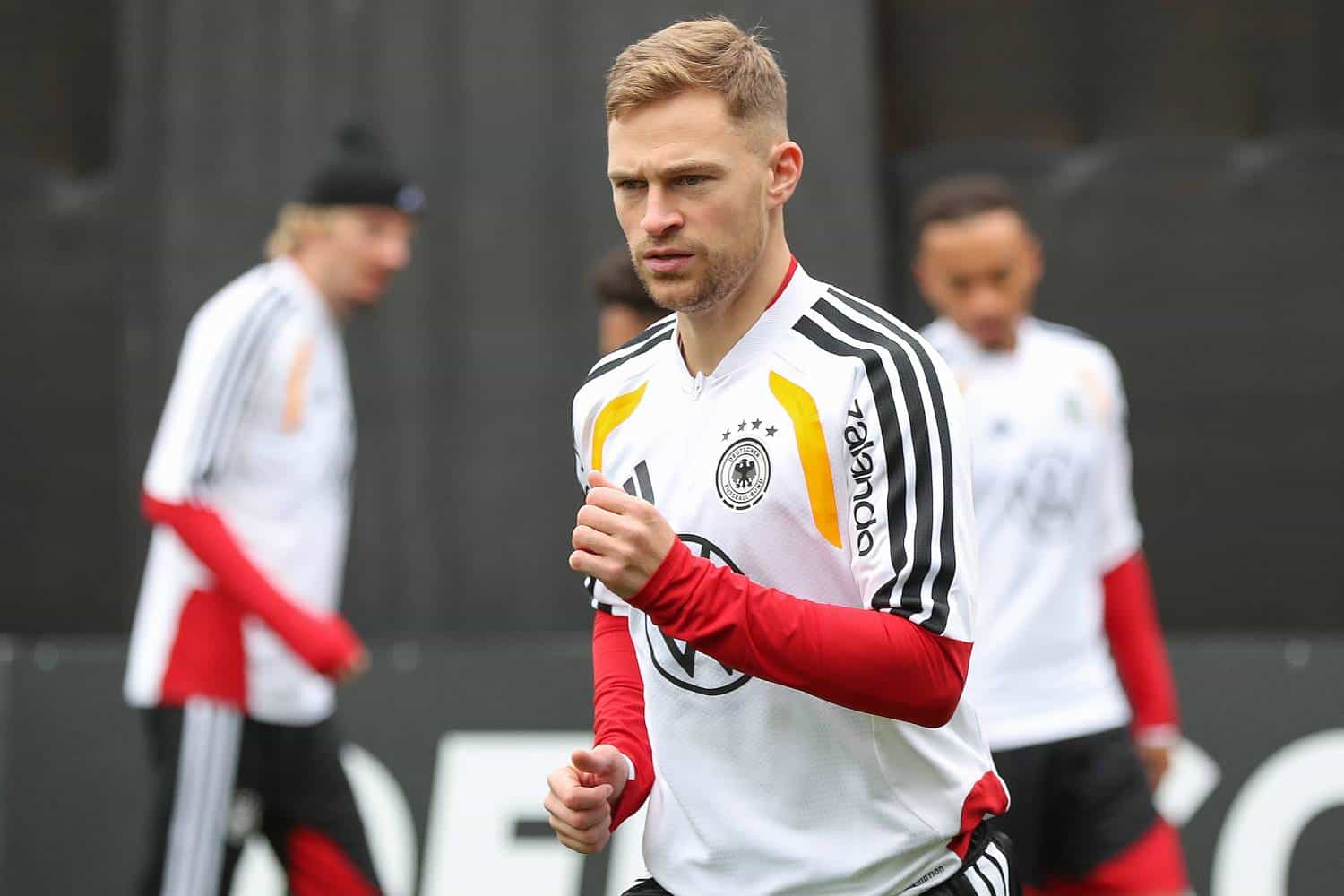
For Kimmich, it is clear who is responsible for political and social issues surrounding a major event such as a World Cup – and who is not. „I think we have other people in Germany and at the DFB who are better informed and should comment on this,“ said the Bayern professional, deliberately referring to association officials and political decision-makers
The German Football Association itself has so far kept a low profile, and there is currently no official statement on the boycott debate. This also fits in with the picture of more cautious communication after the 2022 World Cup turned into a major disappointment both in sporting and atmospheric terms

For Kimmich, one thing is certain: the national team should not once again become the venue for political disputes. His approach is pragmatic – and should also find approval within the DFB, especially as the sporting preparation for the 2026 World Cup should begin early and with clear structures anyway
At FC Bayern and in the national team, Kimmich has long been regarded as a leader whose words carry weight. His clear rejection of political sideshows is therefore more than just a personal opinion. It is a signal – for calm, focus and a return to what should be decided on the pitch
It remains to be seen whether the debate about a possible World Cup boycott will gain momentum in the coming months, but Joshua Kimmich has decided not to go down this route.