

Investor models in soccer remain a much-discussed topic, and FC Bayern has also recently been involved in developments behind closed doors.
According to a report in the Financial Times, talks between FC Bayern and the Swedish investment company EQT took place in the course of this year. The aim was apparently to sell a small stake in the record champions‘ soccer club. However, the negotiations ended abruptly after CFO Michael Diederich – EQT’s direct contact at Bayern – left his post. He moved to the management level at Deutsche Bank in late summer.
The structure of the club generally leaves room for external investments. Although the members‘ association holds at least 70 percent of the spin-off soccer company in accordance with its articles of association, a further five percent could theoretically be sold according to the club’s statutes. The remaining 25 percent is owned in equal shares by long-standing partners Adidas, Audi and Allianz. It remains unclear which specific EQT funds would have been involved in the event of a deal. Neither FC Bayern, EQT nor Diederich have commented publicly on the issue to date.
A week ago, statements by Uli Hoeneß caused a stir. In the OMR podcast, the honorary president emphasised: „In England, the last team standing already gets 50 million euros more than Bayern as German champions.“ He therefore called for a rethink of the 50+1 rule and spoke out in favour of more investor participation – but more in the interests of the competition. According to information from the Abendzeitung München newspaper, however, the club recently categorically ruled out a new financial backer. Even in long-term considerations, additional participation does not currently play a role.
Hoeneß‘ line meets with resistance
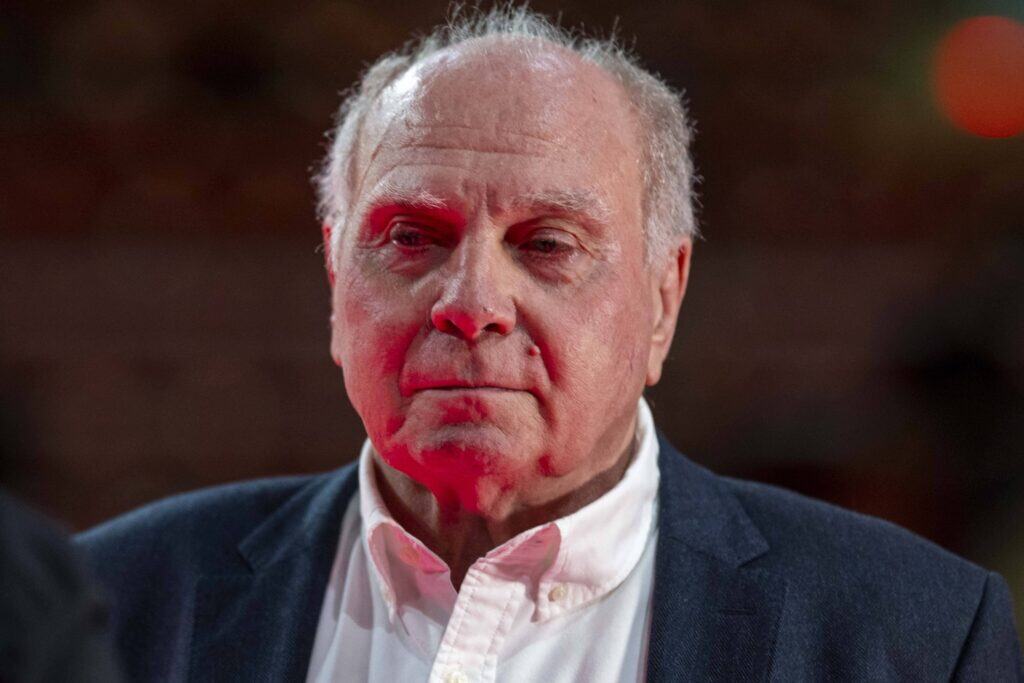
Despite his economic policy arguments, Hoeneß‘ proposal remains controversial internally at FC Bayern. Although he had emphasized that the Munich club would still be competitive under the current conditions, the proposal led to speculation about a possible change in strategy. The fans‘ reaction was prompt: at the home game against FC St. Pauli, the supporters showed their rejection of a softening of the 50+1 rule with clear messages on banners.
A look at the figures shows that FC Bayern is currently under no acute pressure to sell shares. Hoeneß himself confirmed this. According to him, an internal policy decision allows a maximum of 30 per cent external participation. As Adidas, Audi and Allianz each already hold 8.33 per cent, there is arithmetically room for another partner – but that is not what the club wants. According to the AZ, club officials emphasise that stability, independence and member participation continue to have top priority.